

Table of Contents
Heat reflective coatings are applied to metal roofs, Colourbond sheds, walls, and exterior surfaces to reduce the amount of solar heat that transfers into a building. This guide covers how they work, where they are used, and what to consider for commercial and industrial properties in Brisbane.
What Is a Heat Reflective Coating?
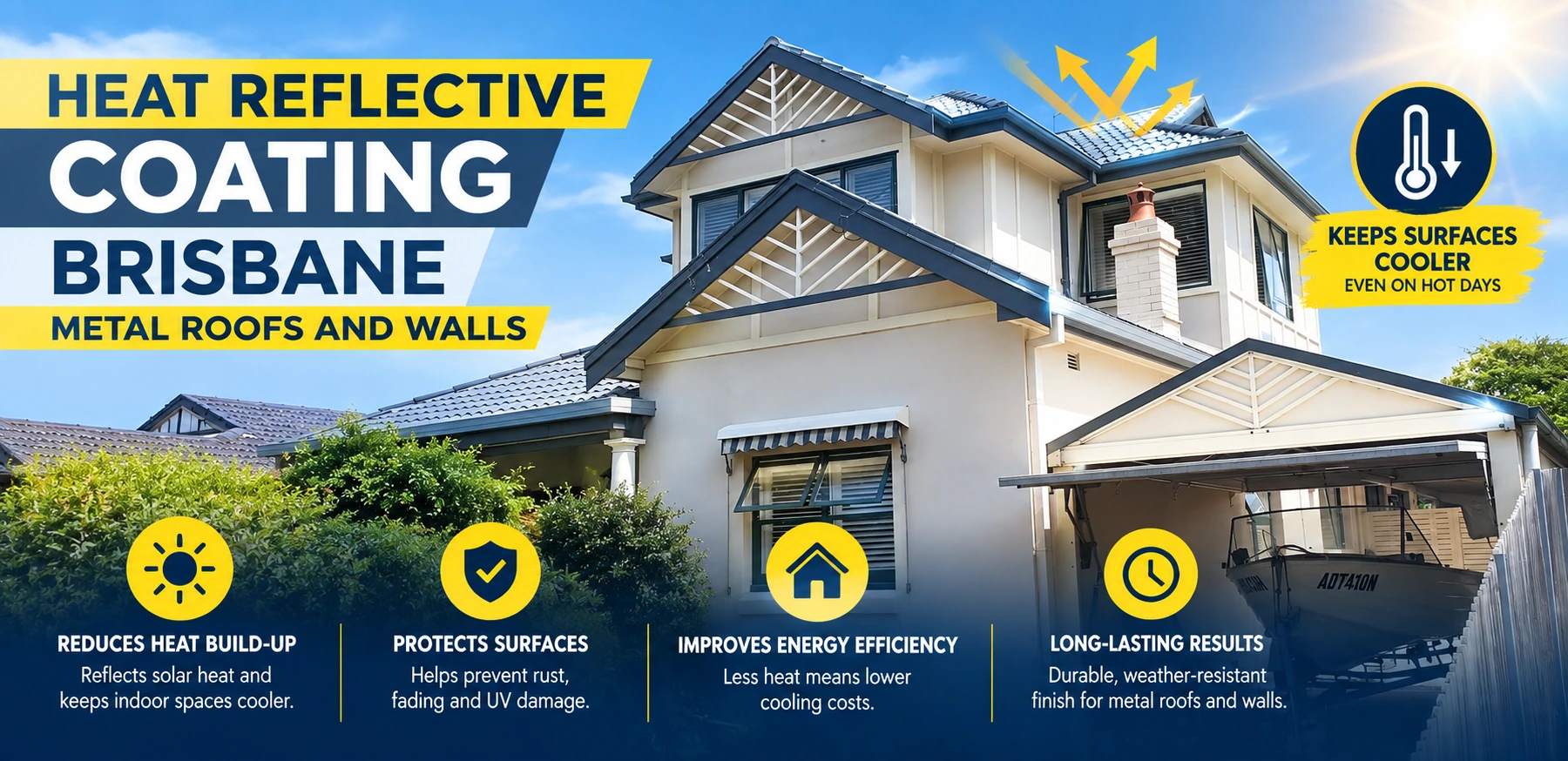
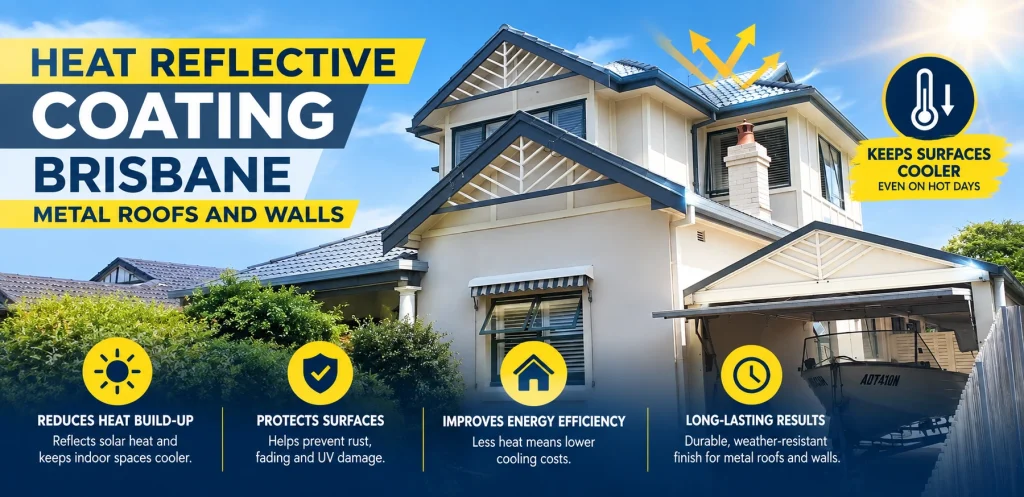
A heat reflective coating is a specialised surface system formulated to reflect solar radiation away from a building rather than absorbing it. When applied to metal roofs, Colourbond surfaces, walls, and other exterior substrates, these coatings reduce the amount of heat that transfers into the structure below.
In Brisbane’s subtropical climate, where summer temperatures and UV exposure are significant, surfaces like Colourbond roofs, metal sheds, and concrete walls absorb and retain heat throughout the day. Heat reflective coatings interrupt that process by reflecting a portion of the solar spectrum, including the infrared radiation that drives heat buildup inside buildings. For industrial and commercial facilities where interior temperatures directly affect working conditions and equipment performance, heat reflective coatings are often specified alongside Epoxy Brisbane’s industrial environment coating system as part of a broader surface protection program for the facility.
What Surfaces Are Heat Reflective Coatings Applied To?
Heat reflective coatings are applied to a range of exterior surfaces across residential, commercial, and industrial properties. Common applications include the following.
- Metal roofs: Corrugated iron, Colourbond, and other steel roofing materials absorb solar heat quickly. A heat reflective roof coating reduces the surface temperature of the roof, which lowers the heat transferred into the ceiling space and interior below.
- Colourbond sheds and workshops: Industrial sheds and workshops built from Colourbond steel are particularly prone to heat buildup in summer. Cool roof coatings on these structures can noticeably reduce internal temperatures, improving working conditions and reducing reliance on mechanical cooling. The Australian Government’s guidance on heating and cooling energy use outlines how reducing heat transfer through building envelopes contributes to lower energy demand in commercial and residential properties.
- Containers and transportable structures: Shipping containers used as site offices, storage units, or portable facilities benefit from heat reduction coatings that lower internal temperatures without requiring additional insulation.
- Walls: Heat reflective wall coatings are applied to rendered, masonry, and concrete wall surfaces to reduce solar heat absorption through external walls. West and north-facing facades in Brisbane receive the highest afternoon sun exposure and benefit most from this treatment.
Pergolas and covered outdoor areas: Depending on the product, some heat reflective systems can be applied to concrete, rendered, and composite substrates used in outdoor entertainment areas and covered walkways.
How Do Heat Reflective Coatings Work?
Heat reflective coatings work through a combination of solar reflectance and thermal emittance. Solar reflectance refers to the proportion of solar energy reflected away from the surface rather than absorbed. Thermal emittance describes the ability of the surface to release any heat that is absorbed back into the atmosphere rather than transferring it into the building.
Products with high solar reflectance and high thermal emittance perform consistently across Brisbane’s climate. The result is a roof or wall surface that stays cooler under direct sun, transfers less heat into the building, and contributes to lower internal temperatures during peak summer conditions.
What Are the Benefits for Commercial and Industrial Properties?
Heat reflective coatings offer practical benefits for commercial and industrial facilities in Brisbane. These include the following.
- Cooler interiors: Reducing heat transfer through roofs and walls lowers the temperature inside workshops, warehouses, and commercial buildings, making working conditions more comfortable without an added cooling load.
- Potential energy savings: Lower internal temperatures reduce demand placed on air conditioning and evaporative cooling systems. For facilities running cooling equipment for extended periods across the Brisbane summer, this can contribute to reduced running costs over time.
- Surface protection: Many heat reflective systems also provide waterproofing and UV protection, which extends the life of the substrate beneath the coating. On Colourbond and metal roofing, this protection reduces the risk of surface corrosion and degradation over time.
- Compatibility with multiple substrates: Depending on the product, heat reflective coatings can be applied to metal, concrete, rendered masonry, and other prepared exterior surfaces, making them a practical option across diverse building types.
Are Heat Reflective Coatings Suitable for Industrial Environments in Brisbane?
Yes. Brisbane’s industrial precincts, including facilities in areas such as Brendale, Rocklea, and the TradeCoast corridor, include large volumes of metal-roofed industrial sheds, workshops, and warehouse structures. These buildings are particularly susceptible to summer heat buildup given their size, metal construction, and limited natural ventilation.
Applying a heat reflective coating system to the roof and wall surfaces of these structures addresses heat buildup at the source. For facilities where worker comfort, product integrity, or equipment performance are affected by internal heat, this type of system can support both operational performance and workplace safety. The industrial coating systems delivered by Epoxy Brisbane cover a range of surface protection applications across commercial and industrial sites in Greater Brisbane.
What Should You Consider Before Choosing a System?
Not all heat reflective coatings perform equally, and product selection depends on the substrate, the condition of the surface, and the specific performance goals for the building. Key considerations include the following.
- Surface preparation: The performance of a heat reflective coating depends on the condition and preparation of the surface it is applied to. Loose, weathered, or contaminated surfaces must be cleaned and prepared before application to achieve reliable adhesion.
- Product specification: Solar reflectance and thermal emittance values vary between products. Specifying a coating with performance data relevant to Brisbane’s climate and your building type produces more consistent results.
- Substrate compatibility: Not all heat reflective products are formulated for all substrates. A product suitable for Colourbond roofing may differ from one designed for rendered masonry or concrete walls. Confirming compatibility before application prevents adhesion failures and premature breakdown.
The concrete resurfacing and surface preparation work carried out before a heat reflective coating installation follows the same principles applied to any high-performance coating project. The QBCC’s guidance on finding a licensed contractor is a useful reference when selecting an applicator for any commercial coating project in Queensland.
Reducing Solar Heat Buildup Across Brisbane Buildings
Heat reflective coatings are a practical option for commercial and industrial building owners across Brisbane looking to reduce internal heat buildup without major structural changes. When applied to prepared surfaces by experienced applicators, these systems can improve building comfort and contribute to surface protection over time.
Epoxy Brisbane works with commercial and industrial clients across Greater Brisbane to assess surface conditions and deliver coating solutions suited to each property. Call 1300 321 433 or reach the team through Epoxy Brisbane to discuss your project.
Frequently Asked Questions
1.What is a heat reflective coating?
A heat reflective coating is a surface system applied to roofs, walls, and other exterior substrates that reflects solar radiation away from the surface rather than absorbing it. By reflecting a portion of the solar spectrum, including infrared radiation, these coatings reduce the amount of heat transferred into the building below. They are used on metal roofs, Colourbond sheds, masonry walls, containers, and concrete surfaces across residential, commercial, and industrial properties. Epoxy Brisbane’s industrial environment coating system covers surface protection applications for Brisbane commercial and industrial facilities, including heat management coatings for high-exposure substrates.
2. What surfaces can heat reflective coatings be applied to?
Heat reflective coatings are applied to a wide range of exterior substrates, including Colourbond and corrugated metal roofing, concrete and rendered masonry walls, shipping containers, pergolas, and certain composite surfaces. Product selection depends on the substrate type and its condition. Surface preparation before application is required to achieve reliable adhesion and long-term coating performance. For concrete surfaces requiring preparation before coating, Epoxy Brisbane’s concrete resurfacing service addresses surface condition issues that would otherwise compromise coating adhesion.
3. Are heat reflective coatings suitable for Colourbond roofs?
Yes. Colourbond and other steel roofing materials absorb solar heat efficiently, which increases internal temperatures in the buildings below. Heat reflective roof coatings applied to Colourbond surfaces reduce surface temperatures and lower heat transfer into the ceiling space. These coatings also provide an additional layer of UV and moisture protection, which supports the long-term condition of the roofing material. This is particularly relevant for Brisbane workshops and industrial facilities where roof heat is a comfort and productivity issue, and where workshop floor epoxy coating is often specified alongside roof coatings as part of a broader facility upgrade.
4. Will a heat reflective coating reduce energy costs?
A heat reflective coating can reduce the demand placed on air conditioning and cooling systems by lowering internal temperatures during peak heat periods. The extent of any reduction depends on the building type, existing insulation, ventilation, and the performance specification of the coating used. For industrial sheds and warehouses without mechanical cooling, the primary benefit is improved internal comfort during summer rather than direct energy cost reduction. Facilities that combine roof heat reflective coatings with warehouse epoxy flooring often do so as part of a broader environmental upgrade that improves both thermal performance and floor durability across the facility.
5. How long does a heat reflective coating last?
The lifespan of a heat reflective coating depends on the product, substrate condition, quality of surface preparation, and environmental exposure. Many systems are designed to perform for 10 or more years under normal conditions. Maintenance inspections and recoating of worn areas as part of a scheduled program extend the working life of the system. Products with high UV resistance generally perform better over time in Queensland’s climate. For context on how surface coating lifespans compare across different applications, how long does epoxy flooring last guide outlines the variables that affect protective coating durability in Brisbane’s conditions.
6. Do you apply heat reflective coatings to industrial sheds and workshops in Brisbane?
Yes. Epoxy Brisbane provides coating services to commercial and industrial facilities across Greater Brisbane. This includes heat reflective systems for Colourbond sheds, metal roofs, workshop exteriors, and other surfaces where heat reduction or surface protection is required. Contact Epoxy Brisbane to discuss your property and arrange an assessment, or call 1300 321 433 directly.
Find Out If a Heat Reflective Coating Is Right for Your Building
If your commercial or industrial building is running hot through the Brisbane summer, a heat reflective coating applied to the roof or wall surfaces may be a practical option worth assessing. The right system, properly applied to a prepared surface, can reduce internal temperatures and extend the life of the substrate beneath. Call Epoxy Brisbane at 1300 321 433 or reach the team online to arrange a site visit. The QBCC’s floor finishing and covering licence requirements confirm that coating work in Queensland is carried out by licensed applicators who have demonstrated the required technical competency.
Key Takeaways
- Heat reflective coatings reduce solar heat absorption on metal roofs, Colourbond sheds, walls, and exterior surfaces, lowering heat transfer into buildings
- Common applications include corrugated metal roofing, Colourbond sheds, workshops, warehouses, containers, rendered walls, and covered outdoor areas
- These coatings work by reflecting solar radiation and releasing absorbed heat back into the atmosphere rather than transferring it into the building below
- Benefits include cooler interiors, potential reductions in cooling system demand, surface UV protection, and extended substrate life
- Product selection depends on substrate type, performance specifications, and surface condition
- Surface preparation before application is critical to coating adhesion and long-term performance
- Epoxy Brisbane provides heat reflective coating services to commercial and industrial properties across Greater Brisbane
