

Table of Contents
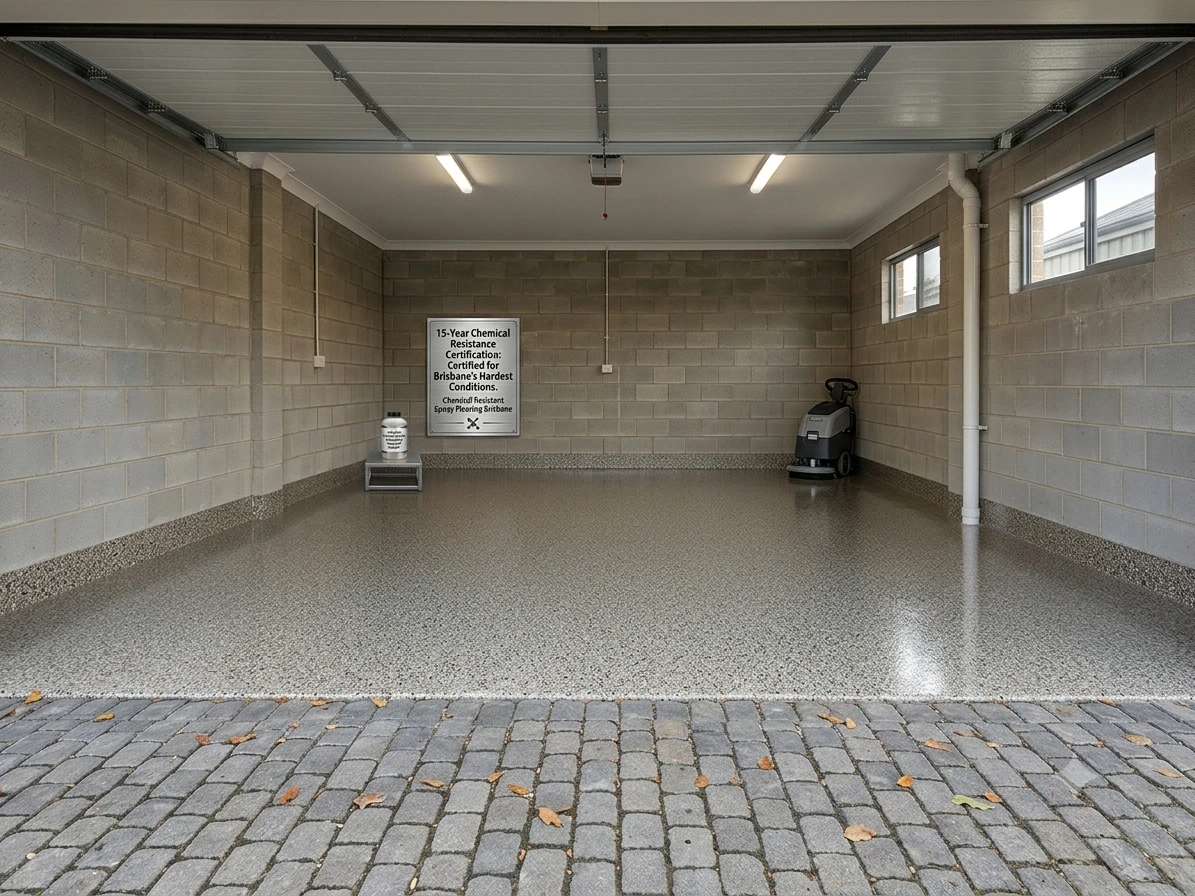
Chemical resistant epoxy flooring is a two-part coating system engineered to protect concrete floors from acids, solvents, oils, and cleaning chemicals in commercial and industrial environments. Epoxy Brisbane installs chemical resistant floor coatings across Brisbane for commercial kitchens, food processing areas, warehouses, and workshops, using professional-grade systems that comply with Australian Standards including AS 4586.
What Is Chemical Resistant Epoxy Flooring and How Does It Work?
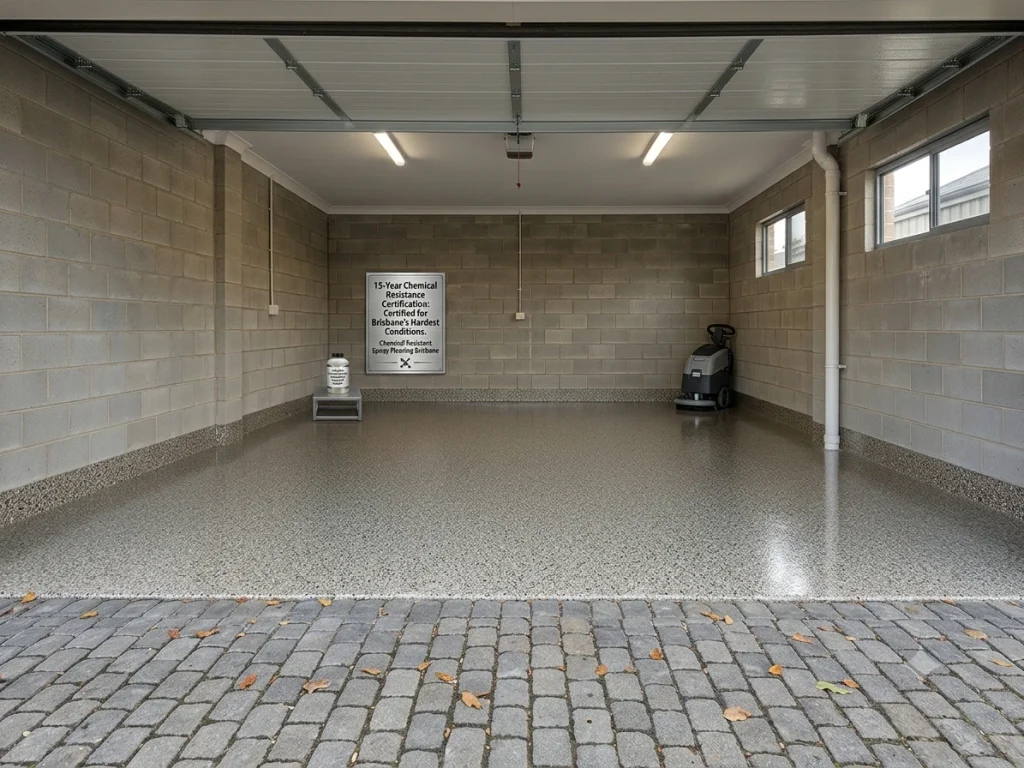
Chemical resistant epoxy flooring is a high-build coating system that bonds directly to a prepared concrete substrate and cures to form a hard, non-porous surface that resists chemical penetration. Unlike standard paint-grade products, a chemical resistant system uses a two-part epoxy formulation, typically combined with a polyurethane or polyurea topcoat, that creates a protective barrier between the concrete and the chemicals that contact it.
The key to its performance is surface preparation. At Epoxy Brisbane, every epoxy flooring installation begins with diamond grinding or shot blasting to open the concrete profile. This mechanical preparation removes contaminants and creates the bond strength the coating system needs to perform over time. Without adequate surface preparation, even the highest-grade chemical resistant coating will fail prematurely.
The coating is then applied in multiple layers, primer through to the sealed topcoat, building up a total system thickness that can withstand repeated exposure to acids, alkalis, food-grade cleaning chemicals, fuel, hydraulic fluid, and other substances common to Brisbane commercial and industrial environments.
Which Environments in Brisbane Need Chemical Resistant Floor Coatings?
Chemical resistant epoxy flooring is appropriate for any environment where concrete floors are regularly exposed to chemicals, liquid spills, or aggressive cleaning agents. The risk is not just surface damage. Unprotected concrete is porous, and repeated chemical exposure leads to structural degradation, surface cracking, and contamination that is difficult and expensive to remediate.
The most common applications in Brisbane include:
- Commercial kitchens and food preparation areas, where hot water, food acids, and caustic cleaning products contact the floor daily
- Food processing facilities, where chemical exposure is continuous and hygiene compliance is mandatory under Australian food safety legislation
- Workshops and light industrial areas, where hydraulic oil, brake fluid, fuel, and degreasers are regularly used
- Warehouses handling chemical products, cleaning supply distribution, or pharmaceutical storage
- Industrial processing plants and manufacturing floors, where acids, solvents, and coolants are present in regular operations
Each of these environments has different chemical exposure profiles, traffic loads, and compliance requirements. Epoxy Brisbane specifies and installs systems matched to the actual operating conditions of each site, not a generic product applied across all environments.
What Makes a Floor Coating Chemically Resistant?
A floor coating is considered chemically resistant when its cured film can withstand prolonged exposure to specific chemicals without softening, blistering, delaminating, or discolouring. Not all epoxy products achieve this standard. The resistance profile of a coating depends on the resin type, the hardener chemistry, the topcoat selection, and the total dry film thickness of the applied system.
Standard epoxy coatings offer moderate resistance to oils and mild chemicals. For environments with acids, alkalis, or solvents, a specialist formulation is required. Epoxy Brisbane works with heavy-duty epoxy and polyurethane systems that are independently tested and rated for chemical resistance. These systems are specified to match the documented chemical exposure on each project before any product is selected.
For food-grade environments, the coating must also be smooth, coved at wall junctions, free of joins and cracks that could harbour bacteria, and compatible with thermal shock from steam cleaning. The Concrete Institute of Australia and Standards Australia publish guidance on coating performance in these environments, and Epoxy Brisbane’s installation process aligns with those recommendations.
How Does Epoxy Brisbane Specify the Right Chemical Resistant System?
Specifying a chemical resistant floor coating correctly starts with understanding the operating environment, not selecting a product from a brochure. Epoxy Brisbane assesses each site based on the chemicals present, the concentration and frequency of exposure, the substrate condition, the traffic type, and whether thermal or impact loads are also factors.
For commercial kitchens and food production areas, the specification typically involves a solvent-free epoxy base coat with a polyurethane topcoat that provides thermal resistance, slip resistance classified to AS 4586, and the ability to withstand daily contact with hot water, steam, and caustic cleaners. Floor coving is installed at wall junctions to prevent liquid pooling at the base of walls, a requirement under food safety regulations in Queensland.
For industrial environments handling solvents, fuels, or acids, a higher-build system is specified, often incorporating a novolac epoxy or vinyl ester layer that provides documented resistance to a wider chemical spectrum. These systems are tested with resistance charts that list individual chemicals and the coating’s rated performance against each one.
For workshops and mechanical areas, the system typically uses a heavy-duty epoxy with an anti-slip aggregate broadcast into the topcoat, giving both chemical and slip resistance where staff are working around oils and fluids.
Why Does Surface Preparation Determine Chemical Resistance Performance?
The chemical resistance of an epoxy floor coating is only as good as its bond to the concrete below. A coating that has not fully bonded to the substrate will delaminate under chemical exposure, thermal movement, or mechanical stress, regardless of how resistant the coating film itself may be. Surface preparation is not a pre-installation formality. It is the factor that determines whether the system performs for 10 years or fails within 12 months.
Epoxy Brisbane uses shot blasting and diamond grinding to mechanically profile the concrete before any coating is applied. These processes remove surface laitance, old coatings, contamination, and weak surface layers, and create the anchor profile that allows the primer to penetrate and bond properly. The level of surface profile required is matched to the coating system and the substrate condition assessed on site.
Contaminated concrete, including floors that have had oil, fuel, or chemical spills over many years, requires decontamination treatment before grinding. Epoxy Brisbane assesses each substrate individually and determines the preparation scope before any pricing or scheduling is confirmed.
How Long Does Chemical Resistant Epoxy Flooring Last in Brisbane Conditions?
A correctly specified and installed chemical resistant epoxy floor coating typically lasts between 10 and 20 years in commercial and industrial environments, depending on the chemical exposure intensity, the daily traffic load, the quality of the installation, and the maintenance routine applied after installation.
Brisbane’s climate adds specific considerations. High ambient humidity during summer months can affect epoxy cure if installation timing is not managed correctly. Epoxy Brisbane schedules installations to account for temperature and relative humidity conditions, applying products within their specified application windows to avoid cure defects that would compromise long-term chemical resistance.
Floors in food processing areas that are cleaned with high-pressure steam or strong caustic agents multiple times daily will experience more topcoat wear than a warehouse floor with weekly cleaning. Maintenance recoating of the topcoat layer at appropriate intervals extends the working life of the full system and is generally less expensive than a full reinstallation.
What Is the Cost of Chemical Resistant Epoxy Flooring in Brisbane?
Chemical resistant epoxy floor coatings are priced per square metre, and the rate varies depending on the system specified, the substrate condition, the site access requirements, and the total area. Entry-level chemical resistant systems for workshops and general industrial use typically start from approximately $50 per m2 installed. High-build, food-grade systems with full surface preparation, coved skirting, and polyurethane topcoat sit at a higher rate reflecting the additional materials and installation time involved.
Unlike standard residential coatings, chemical resistant systems require more product layers, longer cure windows between coats, and more thorough surface preparation. The cost reflects the engineering performance of the system. Epoxy Brisbane provides fixed-price quotations after an on-site assessment. Get in touch with Epoxy Brisbane directly on 1300 321 433 to arrange a site visit and specification review.
Can Chemical Resistant Epoxy Be Applied to Existing Concrete Floors?
Chemical resistant epoxy flooring can be applied to existing concrete in most commercial and industrial sites, provided the substrate meets the requirements for a successful installation. The concrete must be structurally sound, free from hydrostatic pressure issues, adequately prepared to the correct surface profile, and at a moisture content within the product specification.
Damaged or defective concrete is addressed prior to coating. Epoxy Brisbane repairs cracks, spalls, and surface defects using appropriate epoxy repair compounds before the coating system is applied. Floors with significant moisture ingress from below the slab may require a moisture-tolerant primer system or an assessment of the hydrostatic pressure source before work proceeds. The team also carries out concrete resurfacing where the substrate condition requires a levelling or resurfacing layer before the chemical resistant coating can be properly applied.
Chemical Resistance Starts with the Right Contractor
A chemical resistant epoxy floor coating is a precision product that performs only when it is correctly specified, properly prepared for, and installed by a team that understands the environment it is protecting. In Brisbane’s commercial and industrial sectors, a failed floor coating means compliance breaches, contamination risks, unplanned downtime, and costly remediation.
Epoxy Brisbane is a QBCC-licensed contractor with experience across commercial kitchens, food processing facilities, warehouses, and industrial plants throughout Greater Brisbane. Every project begins with a thorough site assessment to confirm the right coating system for the actual operating conditions. To discuss a project or arrange an on-site assessment, get in touch with the Epoxy Brisbane team on 1300 321 433.
Frequently Asked Questions
- What chemicals can epoxy flooring resist?
Chemical resistant epoxy flooring can be formulated to resist dilute acids, alkalis, caustic cleaning agents, food acids, oils, fuels, solvents, and hydraulic fluids. The specific resistance profile depends on the resin type, hardener chemistry, and topcoat selected. Each coating system comes with a chemical resistance chart listing rated performance against individual substances. Epoxy Brisbane selects systems matched to the documented chemicals in each specific environment.
- Is chemical resistant epoxy flooring required in commercial kitchens in Brisbane?
Brisbane commercial kitchens must comply with Australian food safety legislation and local council environmental health requirements, which specify that floor surfaces be smooth, impervious, and able to withstand cleaning with hot water and approved chemicals. A professionally installed chemical resistant epoxy system with coved skirting at wall junctions directly addresses these requirements. Epoxy Brisbane installs food-grade floor coatings that meet the surface performance standards required under Queensland food safety legislation.
- How long does installation take for a chemical resistant epoxy floor?
Installation time depends on the size of the area, the condition of the existing substrate, and the coating system specified. A typical commercial kitchen or workshop of 100 to 300 m2 usually requires two to four days, including surface preparation, primer, intermediate coats, topcoat, and cure time between layers. Larger industrial areas or those requiring significant substrate repair will take longer. Epoxy Brisbane provides a project schedule at the quotation stage so facilities can plan accordingly.
- Can chemical resistant epoxy flooring be used in cold storage or refrigerated rooms?
Yes, chemical resistant epoxy coatings can be applied in cold storage and refrigerated environments, but the product selection and installation approach must account for the operating temperature range. Not all standard epoxy systems are suitable for temperatures below 5 degrees Celsius. Specialist low-temperature formulations or polyurethane systems are used in these environments. Epoxy Brisbane assesses cold storage applications on a case-by-case basis before specifying a system.
- Does chemical resistant epoxy flooring require a slip-resistant finish?
In most commercial and industrial environments, a slip-resistant surface is required. Under AS 4586, the Australian Standard for pedestrian surface traction, floor surfaces in wet areas, kitchens, and industrial workplaces must achieve a minimum wet pendulum slip resistance classification. Epoxy Brisbane incorporates anti-slip aggregate or textured topcoat finishes into chemical resistant systems where the environment and applicable standards require it, without compromising the chemical resistance of the coating.
- Can I get epoxy flooring for a warehouse that handles chemical products?
Yes. Warehouse epoxy flooring systems for chemical product handling require a higher specification than a standard warehouse floor. The product type, concentration, and spill frequency all influence the specification. Epoxy Brisbane specifies warehouse coating systems based on the actual chemicals stored or handled on site, selecting products with documented resistance ratings appropriate to the substances involved. An on-site assessment is the starting point for any warehouse chemical resistant flooring project.
Book Your Site Assessment Today
If your Brisbane facility handles chemicals, cleaning agents, or food products that contact the floor, the right time to review your floor coating is before a failure occurs. Epoxy Brisbane carries out on-site assessments across Greater Brisbane, providing clear specifications and fixed-price quotations for chemical resistant floor coating installations.
Call 1300 321 433 or get in touch with the Epoxy Brisbane team to book your assessment.
Key Takeaways
- Chemical resistant epoxy flooring uses a two-part epoxy system, often with a polyurethane or polyurea topcoat, to protect concrete from acids, solvents, oils, and cleaning chemicals.
- Surface preparation by diamond grinding or shot blasting is the primary factor determining whether the coating system bonds correctly and performs long-term.
- System specification must match the actual chemical exposure profile of the environment. A single product does not suit all applications.
- Food-grade environments require solvent-free formulations, coved skirting, thermal resistance, and slip resistance rated to AS 4586.
- Industrial environments with acids or solvents may require novolac epoxy or vinyl ester systems with documented chemical resistance ratings.
- Correctly installed chemical resistant epoxy flooring in Brisbane typically lasts 10 to 20 years, depending on exposure intensity and maintenance.
- Epoxy Brisbane is QBCC-licensed and installs chemical resistant floor coatings across commercial kitchens, food processing facilities, warehouses, workshops, and industrial sites throughout Greater Brisbane.
