

Table of Contents
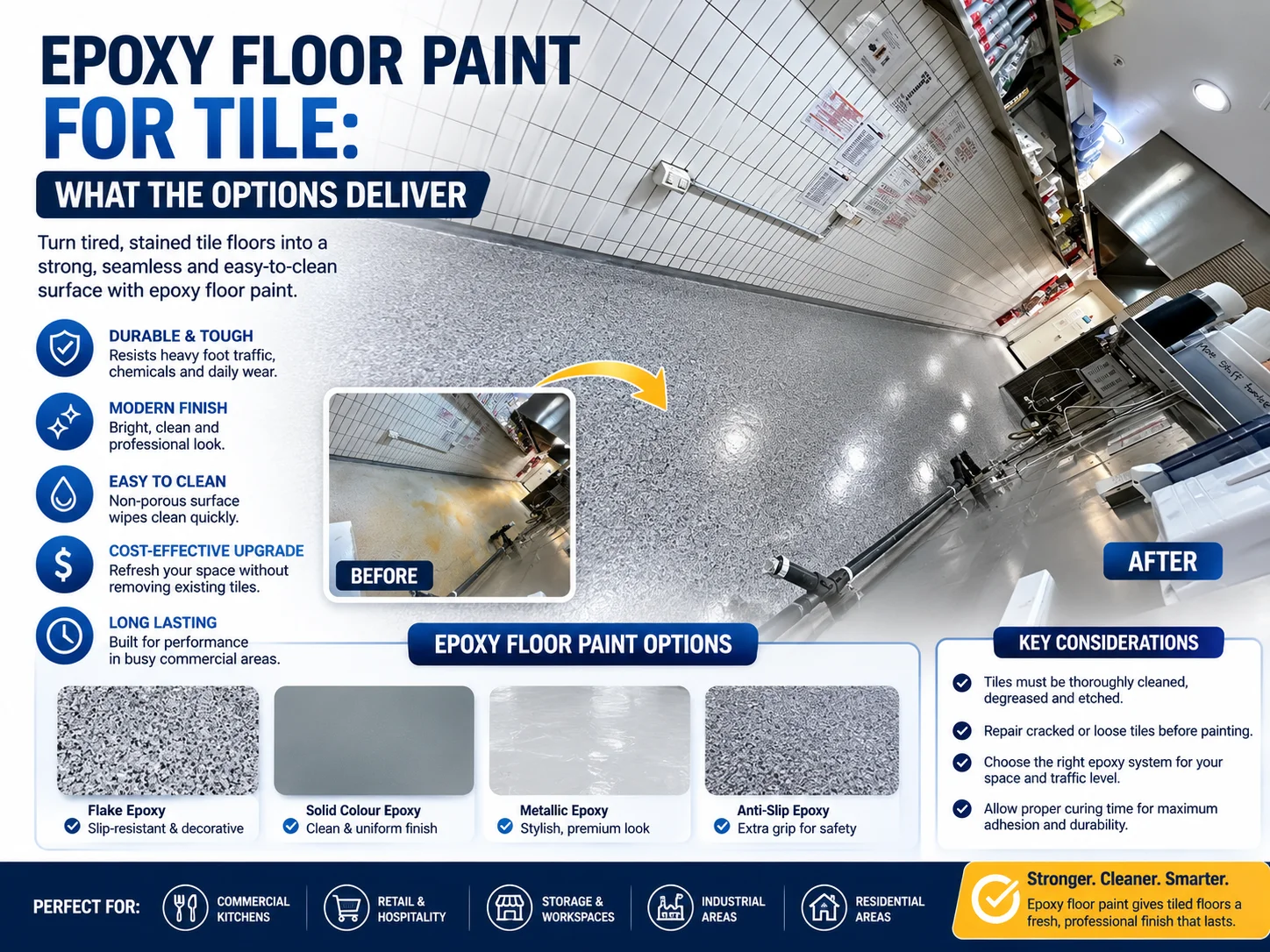
Epoxy floor paint for tile is a broad category covering retail paint-grade products and professional two-part epoxy systems. Paint products suit cosmetic refresh in low-traffic situations. Professional systems deliver the adhesion, hardness, and longevity needed for garage floors, commercial spaces, and any tile floor that sees regular use. Surface preparation determines whether either product performs as expected. Epoxy Brisbane uses professional-grade two-part systems with full tile assessment before every installation.
Why Brisbane Property Owners Ask About Epoxy Floor Paint for Tile
Tiles are one of the most common floor surfaces across Brisbane homes and commercial properties. Over time they discolour, grout deteriorates, and what once looked fresh now looks tired. The idea of refreshing the floor with an epoxy floor paint product, applied directly over the existing tiles without removal, is an appealing one. The question most people have is whether it actually works and how long the result lasts.
The honest answer depends entirely on which product is being used and how well the preparation is carried out. Epoxy floor paint for tile is not a single product category. It spans everything from a tin of water-based epoxy tile enamel to a professionally specified two-component system with specialist primer and polyurethane topcoat. These products produce very different results, particularly on a floor surface that carries foot traffic, vehicle loads, and chemical exposure.
How Epoxy Floor Paint Differs from a Professional Epoxy System on Tiles
Epoxy Floor Paint Products
Paint-grade epoxy floor products are single-component or loosely two-component formulations where the mixing ratio is flexible and the cure mechanism is evaporation-driven rather than chemically reactive. They produce a surface that is harder than standard paint and offers modest resistance to scuffing, moisture, and light chemical exposure. For a bathroom tile floor, a utility room, or a low-traffic outdoor paved area, a quality floor paint product with adequate preparation can provide a useful refresh. The limitation is that these products are thin, softer than true epoxy coatings, and not designed for the stress levels that a garage floor, workshop, or commercial kitchen floor experiences.
Professional Two-Part Epoxy Systems
A professional two-part epoxy floor system is a fundamentally different product. The resin and hardener are mixed in a precise ratio immediately before application, triggering a chemical reaction that cures the coating into a rigid, cross-linked polymer. The result is a surface that is significantly harder, thicker, and more chemically resistant than any paint product. On a tile floor, a two-part system applied over correctly prepared and primed tiles will typically outlast any paint product by a factor of five to ten in a comparable environment. This is the product class used by Epoxy Brisbane for all tile floor installations.
Preparation: The Non-Negotiable Requirement for Both Products
The preparation requirements for epoxy floor paint on tiles are more involved than most people anticipate, and skipping any step is the primary cause of premature coating failure. Tiles present two specific challenges that concrete substrates do not: a glazed, non-porous surface that resists adhesion, and grout lines that sit lower than the tile face and telegraph through any coating applied without levelling.
Surface Grinding and Deglossing
For retail floor paint products, sanding with abrasive pads or a random-orbit sander to remove the tile glaze is the minimum requirement. For professional two-part systems, diamond grinding equipment removes the glaze completely and creates a defined surface profile. Grinding also allows a secondary inspection of tile adhesion, with any hollow or debonded tiles identified and addressed before the coating is applied.
Grout Line Management
Grout lines filled and levelled flush with the tile face before coating is applied produce a seamless finished result. Grout lines left unfilled will telegraph through any epoxy floor paint or coating, appearing as visible lines in the finished surface under raking light. For retail products, partial filling of grout lines with compatible filler is possible but rarely achieves a fully seamless result. For professional systems, a ceramic screed compound is applied, cured, and ground flush before priming begins. Concrete resurfacing techniques used on concrete substrates are adapted for tile levelling where grout depth and condition require it.
Priming for Non-Porous Substrates
A primer formulated for non-porous tile surfaces is required for any coating system applied to glazed tiles. Standard concrete primers are not designed for tile adhesion and will not produce the bond strength needed for a reliable floor coating. For retail products, the compatible primer specified by the same manufacturer is the correct choice. For professional systems, a specialist non-porous substrate primer is applied after grinding and before the two-part epoxy body coat.
Where Epoxy Floor Paint for Tile Works Well in Brisbane
Residential Garage Tile Floors
Garage tile floors in good structural condition are the most common application for professional epoxy floor systems in Brisbane. The finished surface resists vehicle traffic, oil and fuel exposure, and impact from dropped tools far more effectively than the tile below it. The garage epoxy flooring service covers tile substrate assessments and over-coat installations where tile condition supports the approach.
Commercial Kitchen Tile Floors
Commercial kitchen tile floors are frequently assessed for professional epoxy floor system suitability. Where tile condition allows an over-coat approach, the installation avoids the downtime and cost of tile removal while delivering a seamless, chemically resistant surface that meets food safety and slip-resistance requirements. Food Standards Australia New Zealand’s Standard 3.2.3 on Food Premises and Equipment identifies epoxy resins as a suitable flooring material for food handling areas based on their impervious and cleanable surface characteristics. The commercial kitchen flooring team provides specific assessments for food service environments where regulatory compliance is a factor.
Workshop and Industrial Floor Tiles
Workshop and light industrial spaces with intact tile floors are assessed for professional epoxy floor system suitability where removal would cause significant operational disruption. For heavier industrial applications, the tile condition and load requirements are assessed individually to determine whether an over-coat can meet the performance demands of that specific environment. Industrial coatings assessments cover both tile substrate and direct concrete applications depending on the project scope. Workplace Health and Safety Queensland publishes guidance on floor and ground surfaces covering slip resistance requirements and flooring treatment options relevant to workshop and industrial environments across Queensland.
Residential Laundry and Utility Floors
Laundry, utility room, and storage area tile floors with low to moderate traffic are practical applications for retail epoxy floor paint products with adequate preparation. The performance expectations in these environments are lower than in a garage or commercial space, and a quality retail product with correct primer can deliver a useful cosmetic and functional improvement without the cost of a professional installation.
What to Expect from Each Product Type Over Time
A retail epoxy floor paint product applied with correct preparation to a low-traffic tile surface in Brisbane will typically show its first signs of wear within one to two years. High-traffic areas, wet conditions, and exposure to cleaning chemicals accelerate deterioration. Reapplication is required every two to four years in most residential applications.
A professional two-part epoxy system installed over a correctly prepared tile substrate produces a result that requires no reapplication for ten to fifteen years in residential environments and seven to ten years in commercial settings under regular traffic. The investment in preparation and professional installation is reflected directly in the longevity of the result.
Brisbane’s summer humidity and heat affect both product application and cure times. Professional installers account for ambient temperature and humidity conditions when scheduling installations, applying coatings during the cooler parts of the day where appropriate and confirming that cure times are adjusted for prevailing conditions. To review results from completed installations across Greater Brisbane, visit the project gallery on the Epoxy Brisbane website.
Making the Right Choice for Your Tile Floor
The decision between a retail epoxy floor paint product and a professional two-part system comes down to the environment, the traffic, and the lifespan required from the finished surface. For low-traffic cosmetic applications where reapplication every few years is acceptable, a retail product with correct preparation is a reasonable choice. For any floor surface that will carry regular traffic, chemical exposure, or vehicle loads, a professional installation is the only approach that delivers a result worth the investment.
Epoxy Brisbane holds a current QBCC licence and carries out full tile assessments before every installation. The QBCC wall and floor tiling licence confirms that tile work in Queensland is a regulated trade requiring licensed contractors. To arrange an inspection for your Brisbane tile floor, call 1300 321 433 or use the Epoxy Brisbane contact form.
Frequently Asked Questions
1. What is the difference between epoxy floor paint and epoxy floor coating for tiles?
Epoxy floor paint is typically a single-component or loosely formulated product that cures by evaporation and produces a surface similar to durable paint. An epoxy floor coating is a true two-part system where resin and hardener react chemically to form a rigid, cross-linked polymer. For tile floors, the two-part coating is significantly harder, thicker, more chemically resistant, and longer-lasting than any paint product. For a full overview of professional coating options, visit the epoxy flooring Brisbane service page.
2. How long does epoxy floor paint last on tile floors in Brisbane?
Retail epoxy floor paint products applied over prepared tile surfaces in Brisbane typically last two to four years in low-to-moderate traffic applications before reapplication is required. In high-traffic environments or areas with chemical exposure, deterioration occurs faster. A professional two-part epoxy system lasts ten to fifteen years in residential environments and seven to ten years in commercial spaces under regular traffic. The how long does epoxy flooring last guide covers the full range of factors that affect lifespan.
3. Can I apply epoxy floor paint to outdoor tile in Brisbane?
Outdoor tile applications in Brisbane require UV-stable product formulations. Standard epoxy floor paint products are not UV-stable and will yellow, chalk, and degrade under Brisbane’s intense solar exposure. Moisture management beneath outdoor tiles is also a consideration during the wet season. Each outdoor tile floor is assessed individually to confirm the appropriate product system and preparation scope. For outdoor concrete surfaces requiring resurfacing, the concrete resurfacing Brisbane service outlines the available preparation and coating approaches.
4. Do I need to remove tiles before applying professional epoxy floor paint?
Not necessarily. If the tiles are structurally sound, fully bonded to the substrate, free of widespread cracking, and the grout is in manageable condition, a professional two-part epoxy system can be applied over the existing tiles after correct preparation. Where tiles are hollow, cracked across large areas, or grout has severely deteriorated, removal is the more appropriate path. An on-site assessment determines which approach is suitable. View completed tile and concrete floor projects in the project gallery to understand the range of outcomes achievable.
5. Will epoxy floor paint on tiles be slippery when wet?
A high-gloss epoxy surface without anti-slip additives can be slippery when wet, particularly in bathroom, kitchen, and laundry applications. A non-slip aggregate, typically aluminium oxide or quartz, is incorporated into the topcoat for any tile floor application where wet conditions are expected. This is standard practice in professional installations for all wet areas and commercial kitchen floors. Retail products for tiles may or may not include anti-slip options depending on the product range. For residential applications, the residential flooring page outlines slip-resistance options included as standard across Epoxy Brisbane installations.
Arrange a Tile Floor Assessment Across Greater Brisbane
Epoxy Brisbane provides professional tile floor assessments and QBCC-licensed epoxy floor installations across Greater Brisbane and the Moreton Bay region. Every project begins with an honest assessment that confirms suitability before any commitment is made. Call 1300 321 433 or explore the epoxy flooring services to understand the full range of options available for your tile floor.
Key Takeaways
- Epoxy floor paint for tile covers retail paint products and professional two-part systems. These are not interchangeable products.
- Retail paint suits low-traffic cosmetic refresh. Professional systems suit any floor carrying regular traffic, chemical exposure, or vehicle loads.
- All epoxy products require tile glaze removal through mechanical preparation. Primer for non-porous surfaces is required for adhesion.
- Grout line levelling is required for a seamless finished result. Unfilled grout lines telegraph through any coating applied over them.
- Retail products on tiles last two to four years. Professional systems last ten to fifteen years in residential environments.
- Brisbane’s humidity and UV intensity affect product selection. Outdoor applications require UV-stable formulations.
