

Table of Contents
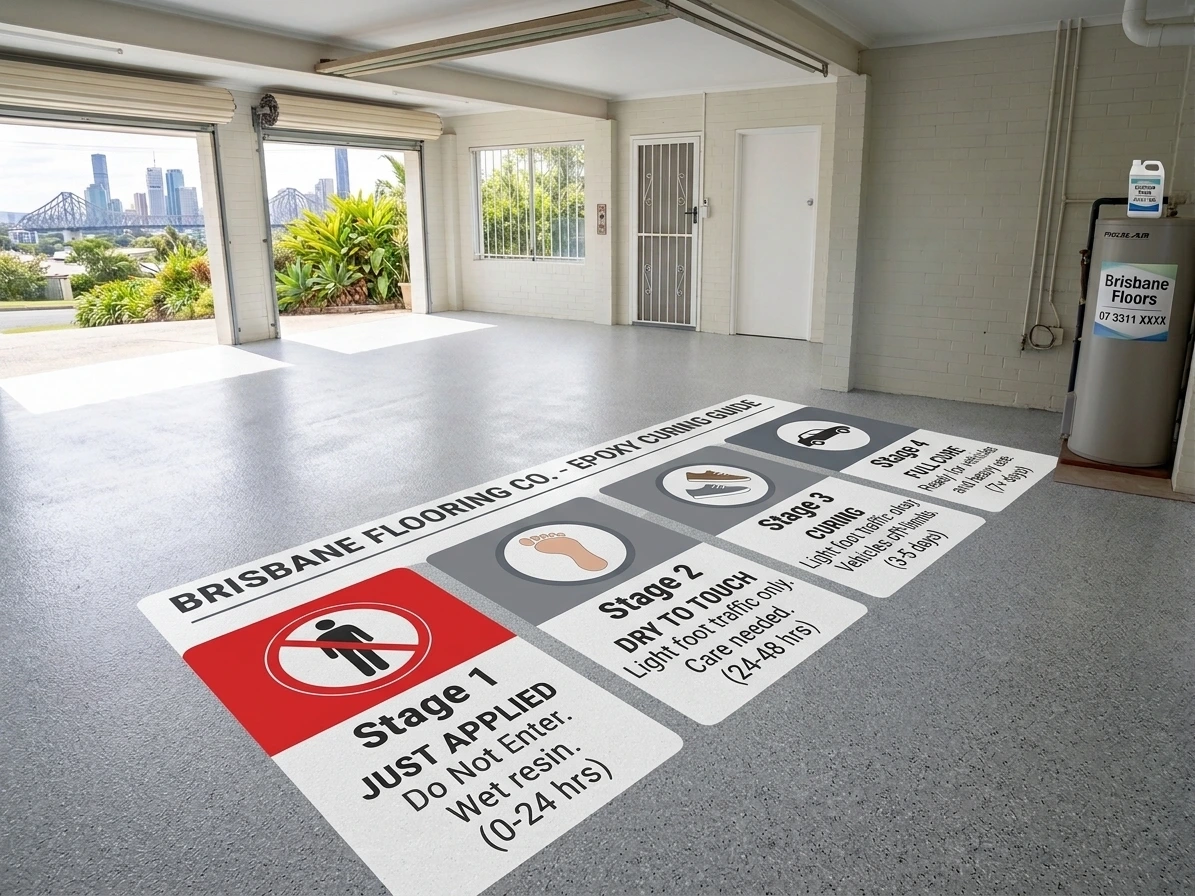
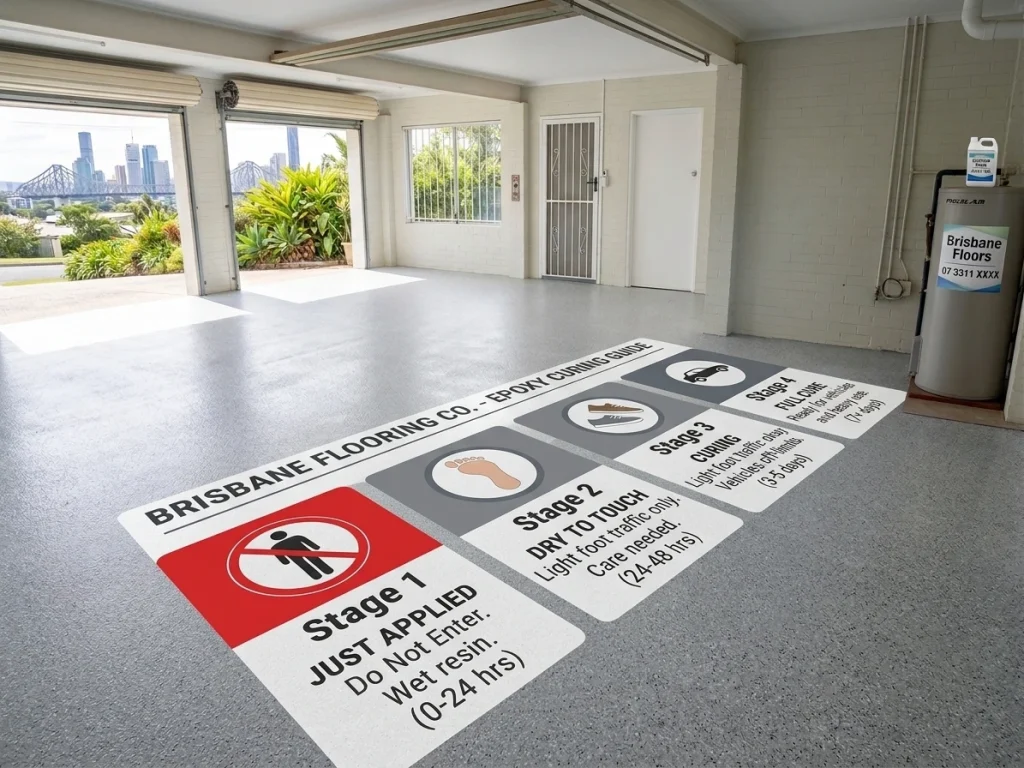
A multi-room epoxy installation in a Brisbane home is sequenced to maintain household access throughout, with high-priority areas such as bathrooms and the kitchen installed first so they reach their use milestones while lower-priority rooms are still being coated. Each room is accessible for light foot traffic within 24 hours of the final topcoat and for full domestic use within 48 to 72 hours. A full-home installation across four to six rooms typically runs five to eight days from first room preparation through to final room access, with Epoxy Brisbane managing sequencing and access planning on every project.
Why Room-by-Room Sequencing Matters for a Brisbane Home Renovation
When Brisbane property owners plan an epoxy floor installation across multiple rooms, the question of how long the floor takes to dry is inseparable from the question of which rooms to do first and how to maintain liveable access to the home during the project. Unlike a garage installation where the household simply parks elsewhere for a week, a multi-room home installation requires the family to live around the project and maintain access to essential rooms, such as the bathroom and kitchen, throughout.
The sequencing of a multi-room Brisbane epoxy installation should be planned around two principles: install the rooms that need the longest cure before reuse first, and maintain access to at least one bathroom and the kitchen at all times during the installation period. Getting this sequencing right makes the difference between a project that the household manages comfortably across a week and one that creates significant daily inconvenience from day three onward when poorly planned access requirements collide with still-curing floors. The Queensland Building and Construction Commission (QBCC) requires that residential flooring work above a defined contract value is carried out by a licensed contractor, which applies to professional multi-room epoxy floor installations across Brisbane homes.
The Australian Building Codes Board publishes guidance on surface finish and slip resistance requirements for residential floors, which is relevant context for Brisbane homeowners specifying epoxy finishes in wet areas such as bathrooms and kitchens during a multi-room installation.
The Dry and Access Timeline for Each Room Type
The Garage
The Brisbane residential garage epoxy flooring installation is the one room in a Brisbane home epoxy project that can be sequenced independently without affecting household access. The garage is not required for daily household function in the same way as interior rooms, making it the natural candidate for either the first room installed, to allow maximum cure time before vehicle access is needed, or the last room installed, after the interior rooms are complete and the household has returned to normal living.
Garage dry and access timeline: touch-dry in four to eight hours; light foot traffic in 16 to 24 hours; full domestic use in 48 to 72 hours; vehicle access in five to seven days. For Brisbane households scheduling their project around the vehicle access requirement, the garage should be started at least seven days before the car must return. Starting the garage installation on day one of a Brisbane school holiday period, with vehicle access restored on day seven or eight, is the most common approach for Brisbane residential garage projects.
The Kitchen
The kitchen is the most access-critical room in a Brisbane home epoxy project. Most Brisbane households cannot manage more than two to three days without kitchen access before the inconvenience of alternative meal preparation arrangements becomes a significant quality of life issue. The kitchen should be sequenced as the first or second room in a multi-room project to maximise the cure time available before the kitchen must return to service.
Kitchen dry and access timeline in Brisbane: light foot traffic at 24 hours; full domestic use and basic meal preparation at 48 to 72 hours; normal kitchen cleaning routine (pH-neutral mopping) at 48 hours; introduction of cleaning chemicals at seven days. The practical access planning for a Brisbane kitchen epoxy floor is: installation completes on day one, household has limited kitchen access from day three under careful soft-footwear conditions, full kitchen access resumes from day three to four, normal cleaning routine resumes from day four, cleaning chemicals resume from day eight.
Food Standards Australia New Zealand publishes Standard 3.2.3 on Food Premises and Equipment, which identifies epoxy resins as a suitable floor material for food handling areas based on their impervious, cleanable surface characteristics. The same principles that make epoxy the right choice for commercial kitchens apply directly to residential kitchen floors, where spill resistance, easy cleaning, and a non-porous finish all matter. For Brisbane homeowners planning a kitchen epoxy floor, understanding the cure schedule before installation day avoids unnecessary disruption to daily routines.
Bathrooms
A Brisbane home with two or more bathrooms can sequence the bathroom installation so that one bathroom remains available at all times during the project. For single-bathroom Brisbane homes, the bathroom installation requires the most careful access planning of any room in the project, as bathroom access cannot be deferred for more than one day without significant household impact.
The bathroom installation is completed in a single day. The floor is accessible for careful barefoot use from 24 hours after the final topcoat in a warm Brisbane autumn or spring installation, with the recommendation to use soft rubber-backed bath mats at the shower and vanity entry points until the 48-hour full domestic use milestone is reached. Non-slip aggregate in the bathroom topcoat is standard for every Brisbane bathroom installation, as described in the residential flooring guide from Epoxy Brisbane.
Living Room and Open-Plan Areas
The open-plan living and dining area, which is typically the largest floor area in a Brisbane home installation, is the room with the most flexibility in sequencing because it is not a daily access critical space in the same way as the bathroom or kitchen. It can be scheduled as the final room in a multi-room project after the high-priority rooms have been installed and are accessible.
Living room dry and access timeline: furniture is removed before installation, so the room is completely clear during the installation day and the first 48 to 72 hours of cure. Carefully placed furniture on felt pads can be returned from 48 hours. Normal foot traffic resumes from 48 to 72 hours. Area rugs can be placed from 72 hours onward. The visual quality of the living room epoxy floor at this stage is typically at its most impressive, as the cured surface has achieved its full gloss level and the space is being seen for the first time in its finished state.
Bedrooms
Bedroom installations require removing all furniture before the installation day and finding alternative sleeping arrangements for the household for at least one night while the bedroom floor is at the touch-dry and light foot traffic stages. In a multi-room Brisbane home project, bedroom installations are typically sequenced to minimise the number of nights that bedroom access is disrupted, with a maximum of two bedrooms installed in the same installation day if the project schedule and installer crew capacity allow.
Bedroom dry and access timeline: light foot traffic at 24 hours allows the bedroom to be accessed for essential items under careful soft-footwear conditions. Furniture on felt pads can be returned at 48 hours. Normal bedroom use resumes at 48 to 72 hours. The bedroom is the room most often specified with a matte or satin topcoat finish rather than the semi-gloss or gloss typical of living areas, which slightly reduces the cure stage durations due to the different topcoat formulation chemistry.
Sequencing a Full Brisbane Home Multi-Room Installation
A practical sequencing plan for a full Brisbane home epoxy installation across kitchen, two bathrooms, open-plan living and dining, two bedrooms, and garage across a typical Brisbane renovation project looks as follows:
Day one: kitchen and bathroom one installed. By day three to four, kitchen and bathroom one are at full domestic access. Bathroom two is still available throughout day one as the uninstalled bathroom.
Day two: bathroom two and first bedroom installed. By day four, both are at full domestic access. Day two afternoon and evening requires the household to use bathroom one, which is at light foot traffic stage. A temporary bath mat at the shower entry manages access safely.
Day three: open-plan living and dining area installed. Day three and four, the household uses the kitchen, both bathrooms, and bedrooms while the living area cures.
Day four: second bedroom and garage installed. By day six, the second bedroom is at full access. Garage at vehicle access milestone on day ten or eleven from installation.
Day six: household is fully back in all rooms at domestic use access level. Normal living resumes. Garage vehicle access follows on days ten to eleven. Chemical cleaning resumes on day thirteen to fourteen across all rooms. To see the results of full-home Brisbane epoxy installations sequenced and installed this way, browse the completed projects on the Epoxy Brisbane website.
Frequently Asked Questions
1. How long do I need to be out of my Brisbane home for a full-home epoxy floor installation?
For a full multi-room Brisbane home installation sequenced as described above, the household does not need to vacate completely at any point. The sequencing maintains bathroom, kitchen, and sleeping access throughout the project period. The most disrupted period is typically days two and three when multiple rooms are in the light foot traffic stage simultaneously and the household is navigating between curing floor areas and accessible rooms. Most Brisbane households find this manageable for the two to three days of peak disruption before the first rooms begin reaching full domestic access. For a closer look at what completed residential installations look like at full cure, the residential gallery shows finished projects across Brisbane homes.
2. Can I sleep in my bedroom the night after epoxy is installed?
A bedroom epoxy floor in Brisbane is at the touch-dry stage by the evening of the installation day. Sleeping in the room that night, with soft footwear or thick socks for the walk from the door to the bed, is possible but not ideal for the floor’s surface during the touch-dry to light foot traffic transition. Most Brisbane households prefer to sleep elsewhere for the first night and return to the bedroom on the second evening when the 24-hour light foot traffic milestone has been reached. This protects the floor surface during the most vulnerable stage of its cure and is the approach Epoxy Brisbane recommends for bedroom installations. For a broader overview of how epoxy performs in residential environments, the is epoxy flooring good for homes guide covers residential suitability across all room types.
3. How long before area rugs can go back on a Brisbane epoxy living room floor?
Area rugs can be returned to a Brisbane epoxy living room floor from 72 hours after the final topcoat application. Before this milestone, a rubber-backed rug placed on the curing surface can leave a texture impression or cause localised adhesion issues between the rug backing and the still-maturing polymer. After 72 hours, the polymer has achieved sufficient hardness and surface cure that rubber-backed rugs, furniture on felt pads, and normal household items can be placed without risk of surface impression or damage. For ongoing care once the floor is fully cured, the how to maintain epoxy floors page covers the cleaning and furniture placement recommendations for Brisbane residential epoxy floors.
4. Does the time of year affect how long my Brisbane home epoxy floor takes to dry?
Yes. Brisbane’s autumn and spring, from March to May and September to November, provide the most favourable cure conditions: temperatures of 18 to 25 degrees Celsius and humidity below 70 percent produce the most consistent and predictable cure timelines. Brisbane’s summer, from December to February, accelerates early cure stages but shortens installation pot life and creates amine blushing risk from monsoon humidity above 85 percent. Brisbane’s winter, from June to August, extends all cure timelines by one to two days at cooler temperatures. Professional installers in Brisbane account for the installation season when providing access milestone commitments to Brisbane residential clients. For a broader look at how Brisbane conditions affect epoxy floor performance over time, the epoxy flooring durability Brisbane page covers the long-term performance factors relevant to the local climate.
Plan Your Brisbane Home Epoxy Floor Project Correctly
Multi-room epoxy floor installations in Brisbane homes are manageable with the right sequencing and access planning. Epoxy Brisbane plans cure stage access milestones for every multi-room residential installation, ensuring that Brisbane households maintain liveable access throughout the project and return each room to full use in the correct order. QBCC-licensed. Call 1300 321 433 or visit the contact form to discuss your Brisbane home multi-room epoxy floor project and access planning.
Key Takeaways
- Multi-room Brisbane home epoxy projects require room-by-room sequencing to maintain bathroom and kitchen access throughout the installation period.
- Kitchen: install first or second. Full domestic access from day three to four. Chemical cleaning from day eight.
- Bathrooms: single-bathroom homes require the most careful single-day access planning. Two-bathroom homes can sequence bathrooms on consecutive days.
- Living room: most flexible in sequencing. Last room in the project. Full domestic access at 48 to 72 hours from topcoat.
- Bedrooms: alternative sleeping arrangements needed for one night. Full access at 48 to 72 hours. Area rugs from 72 hours.
- Full five-room Brisbane home installation: household maintains access throughout, all rooms at full domestic access by day six to seven.
