
Table of Contents
Epoxy flooring and tiles are both popular choices for Brisbane homes, but they perform differently in terms of durability, maintenance, cost, and safety. Understanding where each option excels helps you make the right decision for your specific space.
Why Brisbane Homeowners Compare Epoxy Flooring and Tiles
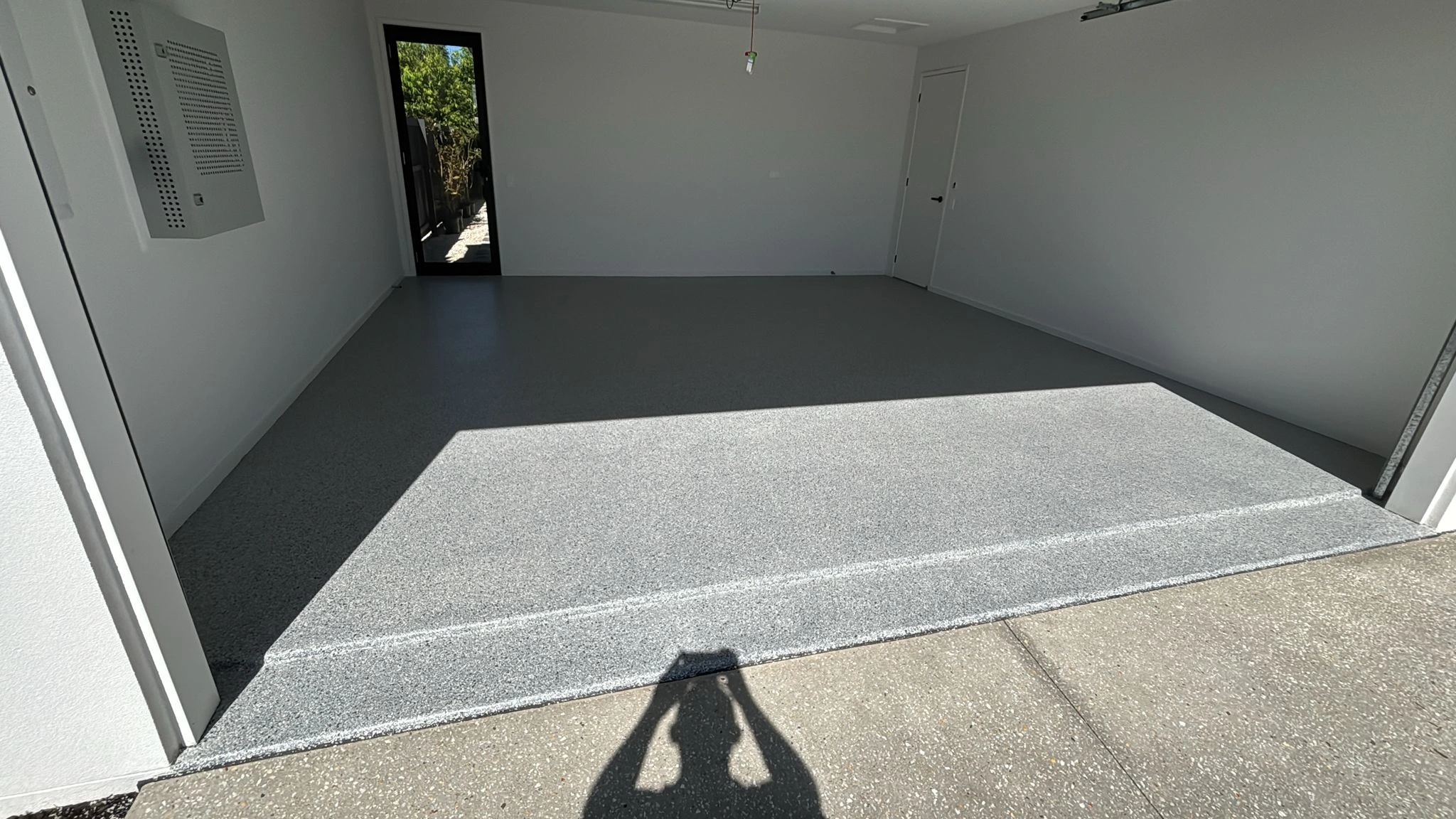
Tiles have been a default choice for kitchens, bathrooms, laundries, and outdoor areas in Brisbane homes for decades. Epoxy flooring has gained significant ground as a competing option, particularly for garages, residential interiors, and commercial spaces. Both have genuine strengths, and the comparison is worth making carefully before committing to either.
Durability: Epoxy Flooring vs Tiles
Epoxy flooring forms a continuous, seamless surface that handles impact, heavy loads, and vehicle traffic without chipping or cracking under normal residential conditions. Tiles are durable individually, but the grout lines between them are a weak point. Grout cracks over time, absorbs stains, and harbours bacteria. A dropped tool or heavy impact can crack a tile entirely, requiring individual replacement.
For high-traffic areas like garages and workshops, epoxy flooring consistently outperforms tiles in terms of long-term surface integrity.
Maintenance: Epoxy Flooring vs Tiles
Epoxy flooring is easier to clean than tiles in almost all situations. The seamless surface has no grout lines, no joins, and no recessed areas where dirt collects. A standard mop and neutral cleaner is sufficient for regular maintenance.
Tiles require grout cleaning in addition to surface mopping. Over time, grout discolours and becomes a maintenance burden, particularly in kitchens and laundries where spills are frequent. Re-grouting is an additional cost that epoxy floors avoid entirely.
Cost Comparison: Epoxy Flooring vs Tiles
Tile installation in Brisbane, including the tile itself, adhesive, grout, and labour, typically ranges from $60 to $150 per square metre depending on tile quality and installation complexity. Epoxy flooring ranges from approximately $30 to $120 per square metre depending on system type. Entry-level epoxy systems are more affordable than most tile installations, while premium decorative or metallic epoxy systems are comparable in cost to mid-range tile projects.
When ongoing maintenance costs are included, epoxy flooring has a lower total cost of ownership over its lifespan because grout repairs, tile replacements, and professional cleaning are not required.
Safety: Epoxy Flooring vs Tiles
Both surfaces can be slippery when wet. Tiles with a smooth or polished face are particularly hazardous in wet areas. Epoxy flooring with a non-slip aggregate added to the topcoat meets the traction requirements outlined in the National Construction Code of Australia for residential and commercial spaces. An anti-slip epoxy surface is generally safer than standard smooth tiles in any wet area.
Grout lines in tile floors also create a trip hazard as they wear, crack, or become uneven over time. Epoxy’s seamless surface eliminates this risk.
Aesthetics: Epoxy Flooring vs Tiles
Tiles offer a wide range of sizes, colours, patterns, and textures, and they are a mature aesthetic choice for residential interiors in Brisbane. Epoxy flooring offers its own design range through solid colours, decorative flake systems, and metallic finishes. For garages and industrial spaces, epoxy’s clean, continuous appearance is generally preferred over tiles. For bathrooms and formal interior spaces, tiles remain a strong aesthetic choice.
Where Each Option Performs Best
Epoxy flooring is the better choice for garages, workshops, laundries, utility rooms, and commercial kitchens. Tiles are well suited to bathrooms, formal interior living areas, and outdoor terraces where their established aesthetic is appropriate and foot traffic is the primary load.
For Brisbane homeowners still deciding, our project gallery shows epoxy flooring installed across a wide range of residential settings, giving a concrete basis for comparison.
Frequently Asked Questions
1. Is epoxy flooring warmer underfoot than tiles?
Epoxy flooring and tiles have similar thermal properties in terms of warmth underfoot. Neither retains heat well in cool conditions. In Brisbane’s warm climate, this is less of a consideration than in cooler parts of Australia, where underfloor heating is more commonly specified with tiles.
2. Can epoxy flooring be used in bathrooms?
Epoxy can be used in residential bathrooms with appropriate anti-slip additives and waterproofing preparation. For wet area applications, the installation requires careful attention to substrate preparation and drainage. Discuss your specific bathroom situation with an installer before proceeding.
3. Which lasts longer, epoxy flooring or tiles?
Both can last 15 to 20 years or longer in residential settings when properly installed and maintained. Tiles are vulnerable to individual cracking and grout deterioration, while epoxy can degrade at the topcoat level over time. In high-traffic commercial or garage environments, epoxy typically outperforms tiles in surface durability.
4. Is epoxy flooring cheaper to install than tiles?
In most cases, epoxy flooring is more cost-effective to install than mid-range or premium tiles, particularly when labour, adhesive, grout, and ongoing grout maintenance costs are included in the comparison.
5. Can epoxy flooring be installed over existing tiles?
Epoxy is generally not recommended directly over tiles without significant preparation. The tile surface and any adhesive or grout variations must be assessed. In some cases, tiles must be removed or resurfaced before epoxy can be applied correctly.
Ready to Transform Your Floor?
If you are ready to take the next step, our Brisbane team is here to help. Get in touch today or call us on 1300 321 433. Our Brisbane team can assess your space and recommend the right surface for your specific needs.
Key Takeaways
- Epoxy flooring is easier to maintain than tiles because it has no grout lines to clean, repair, or regrout.
- Epoxy is more durable than tiles in high-traffic and heavy-load environments like garages and workshops.
- Tiles remain a strong aesthetic choice for bathrooms and formal interior spaces where their look is appropriate.
- Anti-slip epoxy surfaces are generally safer in wet areas than smooth or polished tiles.
- Epoxy flooring is cost-competitive with tiles, and its lower ongoing maintenance cost gives it a lower total cost of ownership.
- Both options have a place in a Brisbane home, and the right choice depends on the specific space and its demands.
