


Table of Contents
Maintaining an epoxy floor is straightforward. Regular sweeping, mopping with a neutral cleaner, and a few practical habits are all that is needed to keep the surface looking and performing well for years. This guide covers everything Brisbane homeowners need to know.
Why Epoxy Floor Maintenance Is Simpler Than Most Surfaces
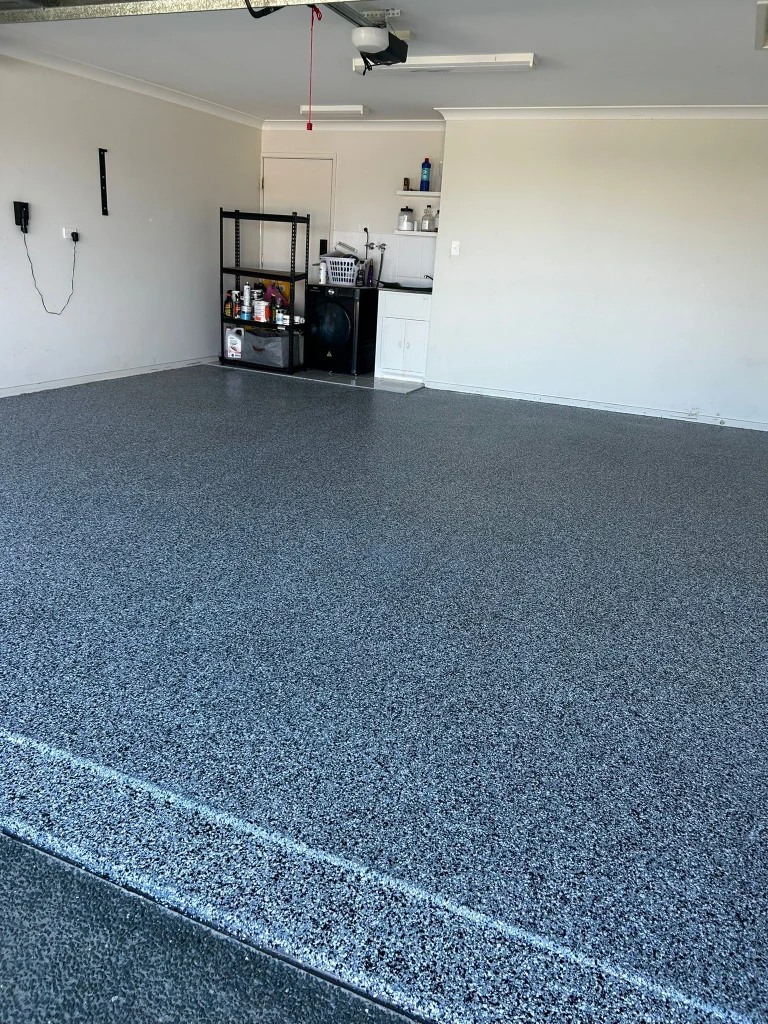
One of the main reasons Brisbane homeowners choose epoxy flooring for garages, residential areas, and workshops is that it requires very little upkeep compared to tiles, timber, or vinyl. The seamless, non-porous surface resists staining, does not harbour dust in grout lines, and cleans quickly with basic tools.
Day-to-Day Cleaning Routine
Sweeping and Dust Removal
Sweeping or vacuuming to remove loose grit, dust, and debris is the most important daily or weekly task for maintaining an epoxy floor. Fine grit and sand act as an abrasive when walked across the surface, and over time this contributes to micro-scratching of the topcoat. Removing it regularly prevents this.
Mopping
For regular mopping, dilute a neutral pH cleaner in warm water and use a soft mop. Avoid applying too much water, as pooling liquid in joints or around edges is unnecessary. Rinse the floor with clean water after mopping if the cleaning product leaves a residue.
Spill Cleanup
Spills should be wiped up promptly. While epoxy flooring is resistant to most chemicals and household fluids, allowing acidic substances like vinegar, citrus cleaners, or battery acid to sit on the surface for extended periods can gradually affect the topcoat finish. Quick cleanup prevents this.
What Cleaning Products to Use and Avoid
Safe Cleaning Products for Epoxy Floors
- Diluted neutral pH floor cleaner
- Warm water with a small amount of dish soap for light cleaning
- Commercial epoxy floor cleaners from flooring suppliers
Products to Avoid on Epoxy Floors
- Acidic cleaners such as vinegar-based products or citrus degreasers
- Solvent-based cleaning products, which can soften or dull the topcoat
- Bleach-based products used undiluted
- Abrasive scouring pads or steel wool
- Steam mops, which can introduce excessive moisture and heat into the coating system
Protecting Your Epoxy Floor From Physical Damage
Furniture and Equipment
Placing rubber or felt pads under the legs of heavy furniture, workbenches, and storage equipment prevents point-load pressure from leaving indentations in the topcoat over time. This is a simple precaution that significantly extends the surface life of the floor.
Vehicle Traffic
In garage settings, avoid spinning tyres on the epoxy surface, as the friction can mark the topcoat. Also be mindful of hot tyre contact during summer, which can cause pick-up in some standard epoxy formulations. A polyurethane topcoat reduces this risk.
Sharp Objects
Dragging sharp-edged metal tools or heavy objects across the floor can leave scratches in the topcoat. Lifting rather than dragging is the simple habit that prevents this.
Addressing Chips and Surface Damage
Minor chips or surface damage should be addressed promptly rather than left exposed. An epoxy repair compound compatible with your specific coating can fill small damaged areas and prevent moisture or debris from working into the gap. For more extensive damage, contact your installer for a professional assessment.
Long-Term Maintenance Considerations
A professionally installed epoxy floor does not need periodic resealing in the way that timber or polished concrete does. The topcoat provides a self-contained protective layer. Over many years of heavy use, the topcoat may show general wear, at which point a recoat can be applied to restore the surface without the cost and disruption of full replacement.
For Brisbane homeowners with workshop floors or warehouse epoxy coatings in heavy-use environments, an annual visual inspection is a useful habit. Catching early signs of delamination or surface wear before they progress keeps repair costs minimal.
Frequently Asked Questions
1. How often should I mop an epoxy floor?
For most residential spaces, mopping once a week or whenever the floor visibly needs it is sufficient. Garages and workshops in regular use may benefit from more frequent mopping, particularly after spills or heavy work sessions.
2. Can I use a pressure washer on an epoxy floor?
Occasional light pressure washing can be used on garage epoxy floors, but high-pressure washing is not recommended for regular maintenance as it can force water into any micro-gaps in the coating over time. Standard mopping is sufficient and safer for regular upkeep.
3. Does epoxy flooring need to be resealed periodically?
No. Unlike timber or polished concrete, epoxy flooring does not require periodic resealing. The integrated topcoat is the sealing layer. When the topcoat eventually shows significant wear after years of use, a recoat is a more appropriate response than resealing.
4. What should I do if my epoxy floor looks dull?
Dulling of an epoxy floor surface can be caused by abrasive grit, incorrect cleaning products, or general topcoat wear over time. Try cleaning with a fresh neutral cleaner and a soft mop first. If the dullness persists, contact your installer to assess whether the topcoat needs attention.
5. Is it safe to use a robot vacuum on an epoxy floor?
Yes. Robot vacuums are safe to use on epoxy floors and are an effective way to manage dust and grit between regular cleaning sessions. Make sure the vacuum’s brushes and wheels are clean and do not carry grit that could abrade the surface.
Ready to Transform Your Floor?
If you are ready to take the next step, our Brisbane team is here to help. Get in touch today or call us on 1300 321 433. Our Brisbane team is available to advise on maintenance, repairs, and recoating for any epoxy installation.
Key Takeaways
- Regular sweeping or vacuuming to remove grit is the most important daily maintenance task for an epoxy floor.
- Mop with a diluted neutral pH cleaner and warm water. Avoid acids, solvents, and undiluted bleach.
- Wipe up spills promptly, particularly acidic substances, to protect the topcoat.
- Use rubber or felt pads under furniture and equipment legs to prevent point-load indentation.
- Epoxy floors do not require periodic resealing. When the topcoat shows significant wear after years of use, a recoat is the appropriate solution.
- Prompt attention to minor chips and surface damage prevents small issues from becoming larger ones.
