

Table of Contents
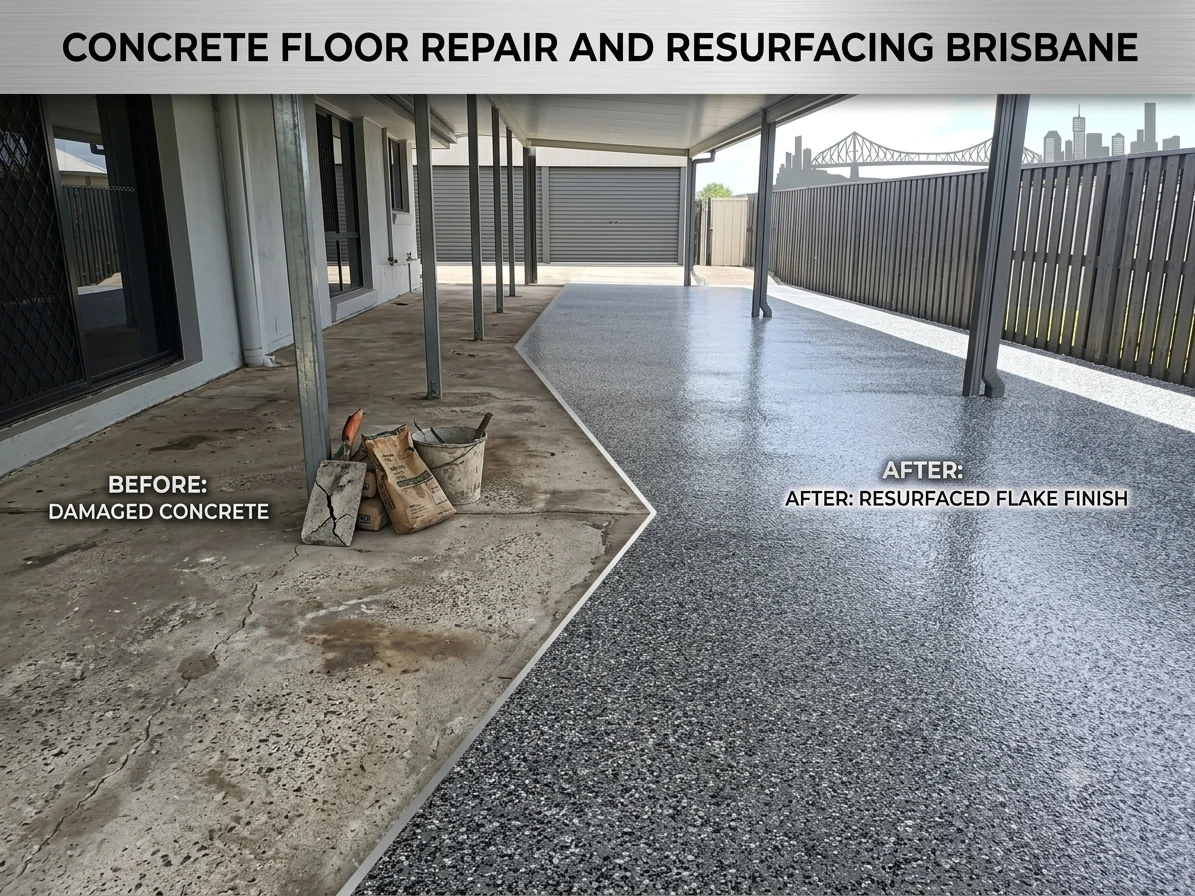
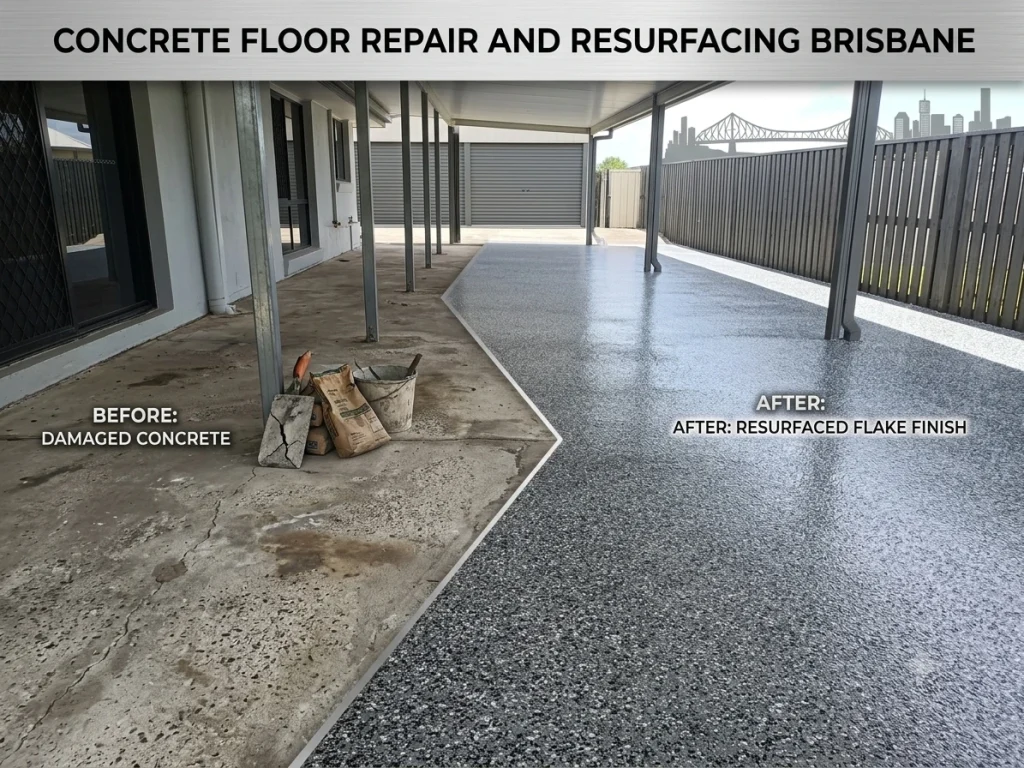
Concrete floor repair and resurfacing covers a range of treatments applied to damaged, deteriorating, or aesthetically worn concrete slabs to restore their structural integrity and surface performance before or after a coating system is applied. Epoxy Brisbane carries out concrete floor repairs and resurfacing work across Greater Brisbane for residential, commercial, and industrial clients, addressing cracking, spalling, delamination, surface defects, and level inconsistencies as part of both standalone repair projects and full floor coating installations.
What Does Concrete Floor Repair and Resurfacing Involve?
Concrete floor repair and resurfacing encompasses the treatments applied to a damaged or deteriorated concrete slab to restore its performance before a coating, sealer, or overlay is applied. It covers everything from localised crack and spall repairs to full-surface resurfacing overlays that rebuild the top layer of a slab. Epoxy Brisbane carries out concrete resurfacing and repair work as both standalone projects and as an integrated phase within broader floor coating installations.
The distinction between repair and resurfacing is important. Concrete repair addresses specific structural defects: cracks, spalls, delaminated patches, surface voids, and damaged edges. Resurfacing applies a new surface layer across a wider area, either to level an uneven floor, restore a worn surface, or build the correct profile for a coating system that the existing concrete can no longer support.
Many floor coating failures in Brisbane originate in substrate defects that were not addressed before the coating was applied. A coating applied over a crack will crack. A coating applied over a spall will delaminate at that point. A coating applied over a floor with moisture-induced delamination will fail in sheets. Repair and resurfacing carried out before the coating goes down is always less expensive than recoating after a premature failure.
What Types of Concrete Defects Does Epoxy Brisbane Repair?
Concrete floor defects fall into several categories, each with a different repair approach. Epoxy Brisbane assesses each defect type during the site inspection and determines the appropriate repair method before any work begins.
- Cracks: Structural and non-structural cracks are filled using epoxy injection or semi-rigid polyurethane filler, depending on whether the crack is live (still moving) or dormant. Live cracks require a flexible filler that can accommodate movement without re-cracking.
- Surface spalling: Shallow surface spalls and flaking caused by freeze-thaw cycles, carbonation, or surface delamination are ground back to sound concrete and filled with a cementitious or epoxy repair mortar.
- Deep spalling and blowouts: Where deterioration extends below the surface into the aggregate layer, the damaged concrete is cut back to a sound edge and repaired with a structural-grade epoxy patching compound.
- Surface voids and bug holes: Small surface voids and bug holes common in poured concrete are filled with a fine epoxy or cementitious filler and sanded flush before the coating is applied.
- High spots and ridges: Concrete with surface irregularities, form marks, or construction joint ridges is diamond ground to remove the high points before any overlay or coating proceeds.
- Level depressions: Low spots that would cause pooling under a coating or overlay are filled with a self-levelling epoxy or cementitious compound before the surface preparation and coating application proceed.
What Is Concrete Resurfacing and When Is It the Right Solution?
Concrete resurfacing is the application of a new surface layer over an existing concrete slab. The resurfacer is a polymer-modified cementitious compound or epoxy overlay that bonds to the prepared concrete surface and provides a new, level, defect-free substrate for a coating or finish. Resurfacing is the right solution when the existing concrete surface is too deteriorated, uneven, or contaminated for a standard thin-film coating to perform reliably.
Resurfacing is appropriate for driveways with widespread surface degradation, concrete floors with extensive shallow spalling across the full area, workshop and warehouse floors where years of use have created a rough, pitted surface, and any floor where the surface condition would cause a direct-applied epoxy coating to fail within the first few years of use.
The resurfacing overlay is applied after full mechanical surface preparation, including diamond grinding or shot blasting, to create the bond profile the overlay needs to adhere correctly. The overlay is trowelled or screeded to the required thickness and level, allowed to cure fully, and then ground or profiled before the final coating system is applied.
How Does Epoxy Brisbane Repair Cracks in Concrete Floors?
Crack repair in concrete floors requires assessing whether the crack is dormant or active before selecting a repair method. A dormant crack that has not moved since it formed can be repaired with a rigid epoxy filler that restores the surface integrity and prevents water ingress. An active crack that is still experiencing movement due to thermal expansion, ground settlement, or structural load must be repaired with a semi-rigid or flexible polyurethane compound that can absorb ongoing movement without re-cracking.
For narrow cracks, Epoxy Brisbane routs or chases the crack to open it to a consistent width and depth, cleans it thoroughly to remove dust and debris, and then fills it under pressure using an epoxy injection system or fills the chased crack with an appropriate repair mortar, depending on the crack geometry and the movement classification.
For wider cracks or cracks associated with joint failures, the repair scope is larger and may include cutting back the damaged concrete to sound edges, installing backer rod, and applying the repair compound in layers to achieve the required depth without shrinkage cracking in the repair itself.
What Is the Process for Concrete Resurfacing in Brisbane?
A concrete resurfacing project follows a structured sequence to produce a result that bonds reliably and performs for its intended service life. Cutting corners at any stage produces a resurfaced floor that debonds or deteriorates within a short period, requiring the entire process to be repeated.
The process begins with surface preparation. The existing concrete is diamond ground or shot blasted to remove any weak surface layer, old coatings, or contamination, and to open the concrete pores for the overlay primer to penetrate. For floors with specific contamination profiles, decontamination treatment is carried out before grinding. Tile glue removal is often required as a preliminary step where ceramic tiles have previously been laid over the concrete.
After surface preparation and any localised crack or spall repairs, a primer appropriate to the overlay system is applied to the prepared concrete. The resurfacing overlay is then applied to the required thickness using trowels, squeegees, or a screed bar depending on the overlay type and the flatness requirements. Self-levelling products are used where a perfectly level surface is required with minimal manual screeding.
Once the overlay has cured to the manufacturer’s specification, the surface is lightly ground or sanded to remove any surface texture or trowel marks, and the final coating system is applied. The total project time from preparation to completed coating depends on the area, the overlay thickness, and the cure schedule of the products used.
What Is the Difference Between Concrete Repair and Concrete Polishing?
Concrete repair and resurfacing address substrate defects and surface deterioration, while concrete floor polishing is a finishing process applied to sound concrete to achieve a refined, reflective surface. The two processes are not interchangeable, and polishing cannot compensate for a substrate that has not been properly repaired.
In practice, repair and polishing often appear together on the same project. Concrete that is being prepared for polishing may have cracks, surface spalls, or joint defects that must be repaired and blended before the polishing sequence begins. Repairs carried out prior to polishing are selected for compatibility with the polishing process, as some repair compounds grind at a different rate than the surrounding concrete and can leave visible patches in the finished polished surface if not properly specified.
How Much Does Concrete Floor Repair and Resurfacing Cost in Brisbane?
The cost of concrete floor repair and resurfacing in Brisbane depends on the type and extent of the defects being addressed, the area to be resurfaced, the products and overlay thickness required, and the access conditions on site. Localised crack and spall repairs are typically priced per repair item or per lineal metre for cracks. Full resurfacing is priced per square metre.
As a general indication, localised epoxy crack repairs for residential floors start from approximately $15 to $30 per lineal metre depending on the crack width and depth. Resurfacing overlays for commercial or industrial floors are typically priced from $40 to $80 per m2 installed, depending on the overlay system and the preparation scope.
Epoxy Brisbane provides itemised, fixed-price quotations covering both the repair and coating phases of each project. Get in touch with Epoxy Brisbane on 1300 321 433 to arrange a site assessment and written quotation.
Repair the Substrate Before You Coat the Surface
Every concrete floor defect that is left unaddressed before a coating is applied becomes a potential failure point in the finished floor. Cracks telegraph through coatings. Spalls cause localised delamination. Uneven surfaces concentrate stress at high points under traffic. Taking the time and budget to repair the substrate correctly before coating is not optional for a floor that is expected to perform for 10 years or more.
Epoxy Brisbane is a QBCC-licensed contractor that has been repairing and resurfacing concrete floors across Greater Brisbane for residential, commercial, and industrial clients. The team assesses the full condition of the substrate during every site inspection, and the repair scope is documented in the written quotation before any work begins. Get in touch with Epoxy Brisbane on 1300 321 433 to book a concrete floor assessment.
Frequently Asked Questions
- Can cracked concrete be coated without repairing the cracks first?
Applying an epoxy coating over unrepaired cracks will produce visible cracks in the coating surface and, over time, allow moisture and contaminants to migrate below the coating at the crack location, leading to delamination around the crack. Minor hairline cracks can sometimes be addressed using a low-viscosity penetrating epoxy applied during the priming stage, but structural cracks and cracks wider than one millimetre must be repaired before coating. Epoxy Brisbane assesses all visible cracks during the site inspection and includes appropriate repair in the project scope.
- How long does concrete resurfacing take to cure before a coating can be applied?
Cure time for concrete resurfacing overlays depends on the product type, the overlay thickness, and the ambient temperature and humidity during cure. Cementitious resurfacing overlays typically require a minimum of 24 to 48 hours before a primer coat can be applied, and full cure may take up to 28 days before the surface achieves its design strength. Epoxy overlays and repair mortars generally cure faster. Epoxy Brisbane confirms the cure schedule for each product used and does not apply subsequent coats before the specified cure window has been met.
- Can Epoxy Brisbane resurface an outdoor concrete driveway?
Yes. Outdoor concrete resurfacing is a common application for Brisbane driveways, pathways, and pool surrounds with surface degradation from weathering, traffic, or UV exposure. Outdoor resurfacing products are selected for their resistance to UV discolouration, thermal cycling, and water exposure. After resurfacing, an appropriate outdoor epoxy coating or concrete sealer is applied to protect the resurfaced surface from ongoing environmental exposure.
- Will concrete repairs be visible after the floor is coated?
When carried out correctly with compatible repair materials and thorough surface preparation, concrete repairs should not be visible as distinct patches under a full-coverage epoxy coating. The coating covers the repaired surface uniformly. Where a polished concrete finish is specified rather than an opaque coating, repairs may show through the polish if the repair compound grinds at a different rate or colour from the surrounding concrete. Epoxy Brisbane selects repair products compatible with the intended finish and advises on any patches that may remain visible in a polished or clear-sealed finish.
- Can Epoxy Brisbane repair concrete floors in occupied commercial buildings?
Yes. Many of Epoxy Brisbane’s concrete repair and resurfacing projects take place in commercial buildings that remain in partial or full operation during the work. Repair work is typically faster and involves less disruption than a full floor coating installation, and sections can often be repaired in rotation to minimise the area out of use at any one time. Site access requirements, any dust or odour sensitivity, and work hour constraints are discussed and agreed at the quoting stage.
- What causes concrete floors to spall or delaminate in Brisbane?
Concrete spalling and delamination in Brisbane occur for several reasons, including the natural carbonation of older concrete, moisture cycling that causes the surface layer to separate from the substrate below, poor curing of the original pour that created a weak surface zone, and surface contamination or inadequate preparation before a previous coating was applied. In some cases, delamination is caused by hydrostatic pressure from below the slab that pushes moisture through the concrete and lifts the surface layer. Epoxy Brisbane identifies the cause of defects during the site inspection and incorporates the appropriate treatment into the repair scope.
Book a Concrete Floor Assessment in Brisbane
If your concrete floor is cracking, spalling, uneven, or showing signs of surface deterioration, the right step is an honest assessment of the substrate condition before any coating is planned. Epoxy Brisbane carries out concrete floor assessments across Greater Brisbane at no obligation, providing a clear repair scope and fixed-price quotation.
Call 1300 321 433 or get in touch with Epoxy Brisbane to arrange your assessment.
Key Takeaways
- Concrete floor repair addresses specific structural defects including cracks, spalls, voids, and surface delamination before a coating or overlay is applied.
- Concrete resurfacing applies a new surface layer over a deteriorated slab to restore a level, defect-free substrate for a coating or finish.
- Active cracks require flexible polyurethane repair compounds; dormant cracks can be filled with rigid epoxy fillers. The correct method depends on whether the crack is still moving.
- Resurfacing follows the same sequence as a coating installation: mechanical surface preparation, primer, overlay application, cure, final grinding, and topcoat.
- Every unrepaired defect in the substrate becomes a potential failure point in the finished coating. Repair before coating is always less expensive than recoating after a premature failure.
- Outdoor concrete driveways, pathways, and pool surrounds can be resurfaced and then sealed or coated to protect the restored surface from ongoing weather exposure.
- Epoxy Brisbane is QBCC-licensed and provides concrete repair and resurfacing services across Greater Brisbane for residential, commercial, and industrial clients.
