
Table of Contents
Anti-corrosion epoxy coatings protect industrial floors, steel structures, marine surfaces, and concrete from chemical damage, moisture, and long-term material breakdown. This guide covers what they are, where they are applied, and why epoxy is a practical choice for corrosion protection in demanding Brisbane environments.
What Are Anti-Corrosion Coatings?
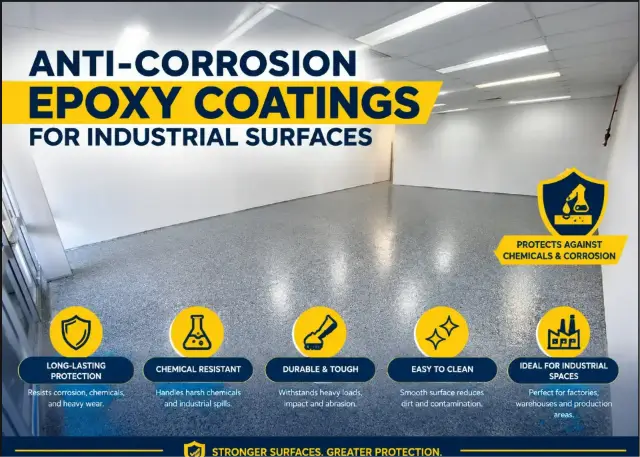
Anti-corrosion coatings are protective layers applied to surfaces vulnerable to chemical attack, moisture damage, rust, or oxidation. In industrial settings, these coatings form a barrier between the substrate, typically steel or concrete, and the surrounding environment.
Epoxy-based formulations are among the most widely used anti-corrosion systems in Australia. They bond directly to prepared substrates and cure to form a hard, chemically resistant surface that withstands oil, acid, salt, and industrial cleaning agents. Unlike surface-level paint products, epoxy protective coatings penetrate and seal the substrate to prevent moisture from reaching the material below. This is the same principle behind our industrial coating systems in Brisbane, where floors and surfaces are matched to the chemical and traffic loads of the facility.
Where Are Anti-Corrosion Epoxy Coatings Used?
Epoxy protective coatings are applied across a broad range of industrial and commercial environments in Brisbane. Common applications include the following.
- Industrial floors: Manufacturing facilities, assembly plants, and processing areas where chemical spills, heavy machinery, and constant traffic accelerate surface breakdown. Industrial epoxy coatings create a hard-wearing, chemically resistant surface that is straightforward to clean and maintain.
- Warehouses and distribution centres: Coatings in high-traffic logistics environments protect concrete slabs from forklift wear, moisture, and oil contamination. Warehouse flooring in industrial settings benefits from epoxy systems that combine long-term durability with chemical resistance.
- Marine and port infrastructure: Structures exposed to salt air, tidal movement, and moisture are among the highest-risk environments for corrosion. Epoxy coatings rated for marine exposure are applied to steel piles, loading structures, and jetties across Brisbane’s port precincts. WorkSafe Queensland’s guidance on hazardous chemicals in the workplace outlines the responsibilities employers carry when managing chemical exposure risks in industrial environments.
- Steel and structural surfaces: Protective coatings on steel beams, columns, and fabricated structures prevent rust formation and extend service life. In industrial facilities, this includes storage tanks, piping, and plant equipment.
- Food processing and commercial kitchens: Coatings in food production environments must resist chemical sanitisers, hot water washdowns, and moisture while remaining hygienic and non-porous. Epoxy systems for food processing areas are formulated to meet food safety compliance requirements without compromising surface performance.
Why Does Epoxy Outperform Other Anti-Corrosion Systems?
Several coating types offer corrosion resistance, including polyurethane, zinc primers, and alkyd-based systems. Epoxy stands apart in industrial environments for several clear reasons.
- Chemical resistance: Epoxy coatings tolerate exposure to a wider range of chemicals than most competing systems. This includes acids, alkalis, solvents, oils, and cleaning compounds common in industrial processes.
- Adhesion: Properly prepared surfaces allow epoxy to bond at a molecular level, reducing the risk of delamination even under thermal cycling or mechanical stress.
- Durability: Industrial epoxy coatings resist abrasion from machinery, vehicle traffic, and impact without cracking or peeling under normal operating conditions. This makes them a cost-effective choice across a long service life.
- Moisture resistance: Moisture is the primary driver of corrosion in most industrial environments. Epoxy coatings form a continuous, non-porous barrier that prevents water ingress and protects the substrate from below-surface deterioration.
- Hygiene compliance: Non-porous surfaces are easier to clean and disinfect, making epoxy coatings compatible with food safety and pharmaceutical manufacturing standards.
How Critical Is Surface Preparation Before Coating?
The performance of any anti-corrosion coating depends directly on the quality of surface preparation before application. For epoxy systems, this typically involves shot blasting or diamond grinding to remove existing coatings, contamination, or surface laitance from concrete. Steel surfaces require mechanical or chemical cleaning to remove rust, mill scale, and grease. Moisture testing confirms the substrate is within acceptable limits before coating begins.
Surface preparation is treated as a core part of every project at Epoxy Brisbane. Applying a high-performance coating to an inadequately prepared surface leads to premature failure regardless of the quality of the product used. The industrial coating systems installed across Brisbane follow a structured process from initial assessment through to final inspection.
How Do Anti-Corrosion Coatings Support Long-Term Value?
Investing in a quality anti-corrosion coating system reduces maintenance costs and extends the operational life of floors, structures, and plant equipment. For facility managers and operations teams, this translates into reduced frequency of floor repairs and patching, lower downtime during maintenance cycles, improved compliance with workplace safety and hygiene standards, and longer intervals between full recoating programs.
For workshops and manufacturing environments, workshop flooring coating systems can be specified with slip-resistant finishes that improve underfoot safety without reducing chemical resistance.
What Does Long-Term Maintenance Look Like?
Epoxy anti-corrosion coatings are low maintenance by design. Routine care involves regular sweeping and wet mopping with pH-neutral cleaning products, prompt removal of chemical spills to prevent concentrated exposure, and periodic inspection of high-traffic zones for signs of wear or impact damage.
Recoating high-wear areas as part of a planned maintenance schedule keeps the system performing at specification. Understanding the operating environment and planning accordingly reduces both cost and disruption across the working life of the facility.
Getting the Right System for Your Facility
Selecting the right anti-corrosion coating for an industrial environment involves more than choosing a product. It requires an understanding of the substrate condition, the operating environment, the chemicals present on site, and the performance expectations of the facility. The QBCC’s floor finishing and covering licence requirements reflect the level of technical knowledge a licensed installer is required to demonstrate before working on industrial coating projects in Queensland. Their guidance on finding a licensed contractor is a useful reference for any facility manager comparing quotes for coating work.
Epoxy Brisbane has delivered industrial and commercial coating projects across Greater Brisbane, including facilities in Brendale, Rocklea, Murarrie, and the TradeCoast corridor. Call 1300 321 433 or reach the Epoxy Brisbane team to discuss your site conditions and coating requirements.
Frequently Asked Questions
1. What is an anti-corrosion epoxy coating?
An anti-corrosion epoxy coating is a protective surface system applied to concrete or steel to prevent moisture, chemicals, and environmental conditions from degrading the substrate. Epoxy forms a hard, chemically resistant barrier that adheres to prepared surfaces and resists penetration by water, acids, oils, and industrial cleaning agents. It is widely used in manufacturing, warehousing, marine, and food production environments across Australia. Epoxy Brisbane’s industrial environment coating system is specified for these high-demand applications across Greater Brisbane.
2. How long does an epoxy protective coating last?
The lifespan of an epoxy protective coating depends on the environment, traffic levels, and quality of surface preparation. In most industrial settings, a well-applied epoxy system can last between 10 and 20 years with routine maintenance. High-traffic areas or environments with aggressive chemical exposure may require recoating sooner. Planned maintenance inspections help identify wear before it becomes a larger issue. For a detailed breakdown of coating durability by environment, the how long does epoxy flooring last guide covers the key variables affecting lifespan across residential, commercial, and industrial installations.
3. What surfaces can anti-corrosion epoxy coatings be applied to?
Epoxy anti-corrosion coatings are commonly applied to concrete floors, steel structures, industrial plant equipment, storage tanks, warehouse floors, and commercial kitchen surfaces. They can also be applied to certain composite substrates depending on the formulation. Surface preparation is required for all substrates to achieve a reliable bond and long-term coating performance. For large-format concrete floors in logistics and storage environments, warehouse epoxy flooring is the most common application of anti-corrosion coating systems across Brisbane.
4. Is epoxy coating suitable for food processing facilities?
Yes. Epoxy systems designed for food processing environments are formulated to meet hygiene and chemical resistance requirements specific to food manufacturing. These coatings are non-porous, straightforward to clean, and resistant to acidic conditions common in food production. They are also compatible with coving systems applied at floor and wall junctions to prevent moisture trapping. Epoxy Brisbane’s food processing area flooring service is specified to meet the hygiene and slip-resistance requirements of Brisbane food manufacturing and production facilities.
5. How critical is surface preparation before applying an anti-corrosion coating?
Surface preparation is the most important factor in coating performance. Poor preparation leads to delamination, blistering, and premature failure regardless of the quality of the coating product. For concrete, this typically involves diamond grinding or shot blasting to open the surface profile. For steel, rust, scale, and contamination must be removed to the appropriate standard before coating is applied. Epoxy Brisbane’s shot blasting service prepares industrial concrete substrates to the surface profile required for high-build anti-corrosion coating systems.
6. Do you offer anti-corrosion coating services across Brisbane?
Yes. Epoxy Brisbane provides industrial epoxy coating services to facilities across Greater Brisbane, including warehouses, workshops, food processing plants, and commercial kitchens. Our commercial kitchen flooring and industrial coating services are available across the Moreton Bay region and surrounding areas. Call 1300 321 433 to discuss your project and arrange a site assessment.
Protect Your Industrial Surfaces with the Right Coating System
Anti-corrosion coating is a long-term investment in the performance and safety of your facility. The right system, installed correctly on a well-prepared surface, reduces ongoing maintenance costs and keeps operations running with minimal interruption. Contact Epoxy Brisbane at 1300 321 433 or reach the team online to arrange a site visit.
Key Takeaways
- Anti-corrosion epoxy coatings form a hard, chemically resistant barrier that protects concrete and steel from moisture, acids, oils, and industrial cleaning compounds
- Common applications include industrial floors, warehouses, food processing facilities, commercial kitchens, marine structures, and steel infrastructure
- Epoxy outperforms many competing systems due to its chemical resistance, adhesion strength, durability, and moisture barrier properties
- Surface preparation is the most important factor in determining coating performance and lifespan
- Routine maintenance including cleaning and planned inspections extends the working life of the coating and reduces long-term costs
- Epoxy Brisbane provides industrial coating services across Greater Brisbane
